Quiet inverter generators make portable power more practical for campsites, RVs, tailgating, workshops, and emergency backup. The models in this roundup range from lightweight gasoline units to high-output dual-fuel generators designed for larger loads.
Use the comparison and buying advice below to match power output, fuel flexibility, runtime, portability, and safety features to the way you plan to use your generator.
Best 10 Inverter Generators with Quiet Operation Picks for 2026
Top High-Capacity Pick

- 5,000 peak and 3,900 rated watts
- As low as 52 dBA with up to 18-hour runtime
- Remote start and RV-ready 30A outlet
Best For: RV owners and home users needing high portable output
Best Lightweight Value
PowerSmart 4000W Inverter Generator

- 4,000 starting and 3,200 running watts
- 59 dBA at 23 feet with Eco Mode
- 50.7-pound design and parallel-ready
Best For: Camping and light home use
Best Dual-Fuel Choice

- 5,000 peak and 3,900 rated watts
- Gasoline or propane operation
- As low as 52 dBA with remote start
Best For: Home backup and RV use with fuel flexibility
Best Compact Camping Pick
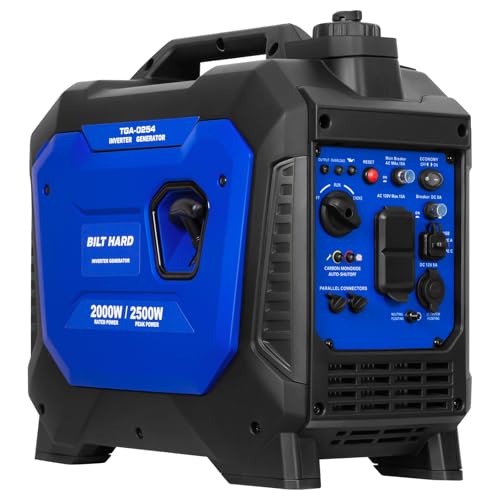
- 2,500 peak and 2,000 running watts
- 42.6-pound design with CO sensor
- Clean power and parallel capability
Best For: Camping and smaller electronics loads
High-Output Dual-Fuel Pick

- Up to 6,800 surge watts on gasoline
- Low-power 240V Level 2 EV charging
- CO shutdown and fuel-shutoff features
Best For: RV and emergency backup with EV charging needs
Quiet Budget-Friendly Option
Aceup Energy 4000W Inverter Generator

- 3,200 rated watts with 4,000 peak watts
- About 60 dB in Eco mode at 23 feet
- Lightweight 48-pound portable design
Best For: Camping and light residential backup
Compact Dual-Fuel Choice

- Gasoline and propane operation
- Quiet performance comparable to conversation
- 49-pound RV-ready portable design
Best For: Quiet camping and moderate RV power needs
Whole-Home Quiet Power

- Up to 12,000 peak watts on gasoline
- As low as 64 dBA with Eco Mode
- Dual fuel with 50A transfer-switch-ready outlet
Best For: Whole-home backup and high-output RV power
Ultra-Light Quiet Pick
WEN 56235i 2350-Watt Inverter Generator
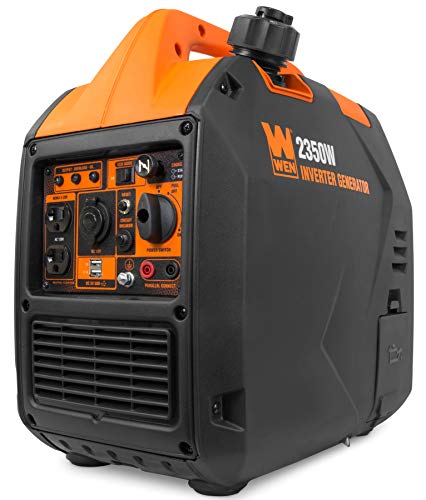
- Only 39 pounds
- Quiet operation comparable to conversation
- 1,900 rated watts of clean power
Best For: Camping and lightweight electronics charging
Quiet Dual-Fuel RV Choice
WEN DF480iX 4800-Watt RV Generator

- 4,000 rated watts on gasoline or propane
- Quiet operation comparable to conversation
- RV-ready TT-30R outlet and CO Watchdog
Best For: RV camping and midrange portable power
Top High-Capacity Pick – Westinghouse iGen5000
For shoppers comparing inverter generators with quiet operation, the Westinghouse iGen5000 combines 5,000 peak watts with a claimed noise output as low as 52 dBA. Its remote electric start, RV-ready outlet, digital data display, and long gas runtime make it a practical option for home backup or travel-trailer use.
Best For: RV owners and households needing substantial portable power with convenient starting and monitoring features.
Pros:
- Provides 5,000 peak watts and 3,900 rated watts with less than 3% THD.
- Runs as low as 52 dBA and up to 18 hours on its 3.4-gallon gasoline tank.
- Includes remote, electric, and recoil starting, plus an RV-ready 30A outlet.
- Rotating LED display shows fuel level, output, runtime, voltage, and lifetime hours.
Cons:
- At 104.7 pounds, it is considerably heavier than the smaller models here.
- It operates on gasoline only.
This is a strong all-around choice when quiet operation, high output, and RV compatibility matter more than portability. The three-year limited warranty and nationwide service network add useful ownership support.
Best Lightweight Value – PowerSmart 4000W Inverter Generator
The PowerSmart 4000W is a compact option for buyers seeking inverter generators with quiet operation without carrying a full-size 5,000-watt unit. It produces clean power under 3% THD, weighs 50.7 pounds, and includes Eco Mode, parallel capability, and several useful outlet types.
Best For: Camping and light home use where lower weight, clean power, and a relatively quiet 59 dBA operating level are priorities.
Pros:
- Supplies 4,000 starting watts and 3,200 running watts with under 3% THD.
- Operates at a claimed 59 dBA from 23 feet away.
- Weighs 50.7 pounds and has a 1.3-gallon tank with an advertised eight-hour runtime.
- Offers Eco Mode, parallel connection support, USB ports, and a 30A twist-lock outlet.
Cons:
- The parallel kit is sold separately.
- Uses recoil start rather than electric or remote start.
- Its two-year warranty is shorter than the three-year coverage on the Westinghouse models.
PowerSmart makes a sensible middle-ground choice for portable use. It trades some convenience and output for a much lighter package while retaining clean inverter power and useful connectivity.
Best Dual-Fuel Choice – Westinghouse iGen5000DF
The Westinghouse iGen5000DF is designed for buyers who want inverter generators with quiet operation and fuel flexibility. It delivers 5,000 peak watts, runs on gasoline or propane, and adds remote electric start, an RV-ready outlet, and a display that tracks key operating information.
Best For: Home backup and RV use where dual-fuel flexibility, high output, and quieter operation are especially valuable.
Pros:
- Produces 5,000 peak watts and 3,900 rated watts with less than 3% THD.
- Supports gasoline or propane operation and includes a propane hose.
- Runs as low as 52 dBA, with up to 18 hours of runtime on its 3.4-gallon gas tank.
- Includes remote, electric, and recoil start plus an RV-ready 30A outlet.
Cons:
- Its 104.7-pound weight limits easy lifting and transport.
- Propane runtime is not specified in the supplied product information.
Choose this model over the gasoline-only version if fuel availability is a major concern. It offers the same high-capacity, quiet platform while allowing propane as an alternative fuel source.
Best Compact Camping Pick – BILT HARD 2500W
For basic camping power and smaller loads, the BILT HARD 2500W is a compact choice among inverter generators with quiet operation. Its 42.6-pound body, clean sine-wave output, CO sensor, and parallel-ready design make it practical for portable outdoor use.
Best For: Campers and users running smaller electronics, lights, televisions, laptops, or phones.
Pros:
- Provides 2,500 peak watts and 2,000 running watts with less than 3% THD.
- Weighs 42.6 pounds and uses an 80cc four-stroke engine.
- Includes an integrated CO sensor that shuts down the engine in unsafe conditions.
- Supports parallel connection and offers AC and 12V DC outputs.
Cons:
- Its 2,000 running watts are lower than those of the other generators in this roundup.
- Advertised runtime is up to 5.5 hours at 50% load, or approximately five hours in the listed specifications.
- The parallel kit is not included, and the warranty is one year.
This is the most portable option here and a good fit when your power demands are modest. Its CO safety sensor and clean inverter output are useful advantages, but it is not intended for the heavier loads supported by the 4,000- and 5,000-watt models.
High-Output Dual-Fuel Pick – 6800-Watt WEN DF680iX
The WEN DF680iX is a strong choice among inverter generators with quiet operation when you need substantial backup capacity for an RV, home essentials, or limited electric-vehicle charging. Its dual-fuel setup provides flexibility, while the bonded-neutral 240V configuration supports low-power Level 2 charging for battery and hybrid vehicles.
Best For: RV owners and emergency-preparedness buyers who need high output, dual-fuel flexibility, and EV backup capability.
Pros:
- Delivers up to 6,800 surge watts on gasoline and 6,000 on propane.
- Bonded-neutral 240V configuration supports low-power Level 2 EV and hybrid charging.
- Includes CO Watchdog shutdown, fuel shutoff, electric start, and RV-ready outlets.
Cons:
- At 99.2 pounds, it is considerably heavier than the other options here.
- Its listed runtime is six hours, so extended use may require refueling.
The DF680iX prioritizes output and versatility over portability. Choose it when dual-fuel operation, RV connectivity, and EV backup matter more than carrying weight.
Quiet Budget-Friendly Option – Aceup Energy 4000W Inverter Generator
The Aceup Energy 4000W is a practical option for shoppers comparing inverter generators with quiet operation for camping, outages, and residential use. In Eco mode, it is rated at about 60 decibels at 23 feet and provides clean inverter power with THD below 1.5% for sensitive electronics.
Best For: Campers and homeowners seeking a lightweight, gasoline-powered generator with quiet Eco-mode operation and useful monitoring features.
Pros:
- Produces 4,000 peak watts and 3,200 rated watts.
- Quiet Eco-mode rating of about 60 decibels at 23 feet and 25% load.
- Digital gauge tracks voltage, runtime, fuel, hertz, and output; parallel-ready design adds flexibility.
Cons:
- Uses recoil start rather than electric start.
- Runs on gasoline only.
- The listed warranty information is inconsistent, citing both one- and two-year coverage.
At 48 pounds, this Aceup model is the most portable choice in this group. Its moderate output and monitoring display make it well suited to everyday recreational and backup use.
Compact Dual-Fuel Choice – WEN 3600-Watt DF360iX
The WEN DF360iX combines a compact design with the quiet operation expected from inverter generators with quiet operation. It runs on gasoline or propane, produces clean power for electronics, and includes RV-ready connectivity, making it a versatile option for camping and residential backup.
Best For: Campers and RV users who want a relatively lightweight dual-fuel generator with quiet performance and electronics-friendly power.
Pros:
- Dual-fuel operation provides gasoline and propane flexibility.
- Quiet performance is described as comparable to a normal conversation.
- Includes CO Watchdog, fuel shutoff, RV receptacle, USB ports, and a three-year limited warranty.
Cons:
- Rated output is 2,900 watts on gasoline and 2,600 watts on propane.
- The listed gasoline runtime is five hours.
- It uses spark ignition rather than an electric-start system.
Weighing 49 pounds, the DF360iX balances portability, quiet use, and fuel flexibility. It is a sensible fit when your loads are moderate and RV or camping convenience is a priority.
Whole-Home Quiet Power – Westinghouse iGen12000DFc
For shoppers seeking inverter generators with quiet operation and substantial backup capacity, the Westinghouse iGen12000DFc combines dual-fuel flexibility with up to 12,000 peak watts on gasoline. Its enclosed design, Eco Mode, insulation, and mufflers help reduce operating noise to as low as 64 dBA, while low THD output is designed for sensitive electronics.
Best For: Whole-home backup, RV use, and buyers who need high output with gasoline or propane flexibility.
Pros:
- Produces up to 9,000 running watts on gasoline and 8,100 on propane.
- Quiet operation is rated as low as 64 dBA with Eco Mode.
- Includes a 50A outlet, transfer-switch-ready connections, remote start, and a CO sensor.
- Large fuel tank supports extended operation, with up to 19 hours at 25% load listed.
Cons:
- At 187.4 pounds, it is considerably less portable than smaller inverter models.
- Its high output and large footprint may be more than needed for basic camping or occasional small-load use.
The iGen12000DFc is a strong choice when quiet operation matters but whole-home power is the priority. Its dual-fuel capability, low-THD output, and transfer-switch-ready outlets make it especially practical for residential backup, provided you have room for a heavy generator.
Ultra-Light Quiet Pick – WEN 56235i 2350-Watt Inverter Generator
The WEN 56235i is a compact option for shoppers comparing inverter generators with quiet operation for camping and light-duty portable power. It delivers 2,350 surge watts and 1,900 rated watts of clean power, while its 39-pound body is easy to carry and store.
Best For: Camping, charging electronics, and buyers who prioritize low weight and simple transport.
Pros:
- Weighs only 39 pounds for easier carrying and storage.
- Quiet operation is comparable to a normal conversation, according to the supplied product notes.
- Clean inverter power is suitable for phones, tablets, televisions, and computers.
- Offers two 120V outlets, a 12V DC outlet, and two USB ports.
Cons:
- Its 1,900-watt running output is intended for smaller loads rather than whole-home backup.
- Runs on gasoline only, without the dual-fuel flexibility of larger models in this roundup.
- The one-gallon tank provides less fuel capacity than high-output generators.
Choose the 56235i when portability and conversationally quiet operation matter more than maximum wattage. Its clean output and USB connectivity suit personal electronics and campsite essentials, but heavier appliances may exceed its rated running capacity.
Quiet Dual-Fuel RV Choice – WEN DF480iX 4800-Watt RV Generator
For RV travelers who want inverter generators with quiet operation without giving up useful capacity, the WEN DF480iX offers 4,000 rated watts on either gasoline or propane. Its clean inverter power, electric start, RV-ready TT-30R receptacle, and CO Watchdog sensor make it a versatile campsite power solution.
Best For: RV owners and campers who need dual-fuel flexibility, quiet performance, and midrange output.
Pros:
- Provides 4,000 rated watts on both gasoline and propane.
- Quiet operation is comparable to a normal conversation, according to the supplied notes.
- Includes a TT-30R RV receptacle, four 120V outlets, USB ports, and a 12V DC outlet.
- CO Watchdog automatically shuts down the generator if dangerous carbon monoxide levels are detected.
Cons:
- At 78.5 pounds, it is portable but substantially heavier than the WEN 56235i.
- Its listed runtime is seven hours, so extended use may require more frequent refueling.
- It provides 120V output rather than the 120/240V configuration found on the larger Westinghouse model.
The DF480iX balances useful RV output with quiet operation and fuel flexibility. It is a practical middle ground for campers who need more capacity than a compact generator offers, while its wheels, pull handle, electric start, and safety sensor simplify operation.
How We Picked the Best Inverter Generators with Quiet Operation
We selected models across several common use cases, including camping, RV service, home backup, tools, and higher-demand emergency power. Our evaluation focuses on rated and peak output, inverter-based power delivery, stated noise-conscious designs, fuel type, starting method, portability, RV compatibility, parallel capability, and built-in safety features such as carbon monoxide monitoring.
Because noise ratings can vary by load, distance, and testing conditions, treat “quiet” as a design goal rather than a guarantee of one fixed sound level. Always check the manufacturer’s specifications and operating instructions before purchase.
Quick Comparison
Smaller options around 2,000 to 2,500 watts are easier to carry and generally suit electronics, lights, small appliances, and modest camping loads. Models in the 3,600- to 5,000-watt range offer a stronger balance for RV use, refrigerators, sump pumps, and multiple household devices. The 6,800- to 12,000-watt models are better suited to demanding backup scenarios, but they require more storage space, fuel, and careful load planning.
Dual-fuel models can run on gasoline or propane, giving you flexibility when fuel availability, storage life, or runtime matters. Electric and remote starting add convenience, while wheel and handle kits make heavier generators easier to position.
Key Buying Factors for Inverter Generators with Quiet Operation
Power Output and Load Management
Compare continuous, or rated, watts rather than relying only on peak watts. Add the running wattage of the devices you expect to use, then account for startup surges from refrigerators, pumps, compressors, and power tools. Avoid operating at the generator’s maximum continuously.
Noise, Fuel Use, and Runtime
Look for published decibel ratings and note the test conditions. Eco or variable-speed modes can reduce engine speed and fuel consumption during lighter loads. A larger tank may extend runtime but can increase weight and bulk.
Fuel and Starting Options
Gasoline is widely available and often delivers the highest output. Propane stores well and can be useful for emergency preparedness. Electric, remote, and recoil starting each have trade-offs, so consider cold-weather use, battery maintenance, and how accessible the generator will be.
Safety and Compatibility
Carbon monoxide sensors, automatic shutdown, overload protection, low-oil shutdown, and covered outlets are valuable safeguards. RV users should verify the outlet type and amperage. For home circuits, use a properly installed transfer switch and never connect a portable generator directly to household wiring.
Who Should Buy Which Inverter Generators with Quiet Operation?
Choose a lightweight 2,350- or 2,500-watt unit for basic camping, tailgating, and occasional electronics. A 3,600- to 4,800-watt dual-fuel model is a versatile choice for RV owners and households wanting convenient fuel flexibility. Consider a 4,000- to 5,000-watt generator for heavier recreational loads or moderate emergency backup. Buyers preparing for extensive home backup or large startup loads should look at the highest-output options, provided they have suitable ventilation, storage, and fuel plans.