Reliable power looks different off the grid. Some buyers need a quiet, portable generator for an RV or campsite, while others need a solar hybrid inverter that can support batteries, panels, and household loads.
This roundup compares 10 off-grid power options across portable dual-fuel generators, pure-sine-wave inverters, and high-capacity solar systems. Use the guide below to match output, fuel type, connectivity, and installation requirements to your setup.
Best 10 Off-Grid Inverter Generators Picks for 2026
High-Capacity Fuel Backup
WEN DF680iX Dual-Fuel Inverter Generator

- Up to 6,800 surge watts on gasoline
- 240V configuration with EV charging support
- RV-ready outlets and CO shutdown sensor
Best For: RV users and high-output emergency backup
Solar Power Hub
SUNGOLDPOWER 10KW 48V Solar Inverter

- 10,000W pure sine wave output
- Dual MPPT controllers and 200A charging
- Selectable 120V/240V split-phase output
Best For: Large stationary 48V solar and battery systems
Quiet RV Companion
WEN DF480iX Quiet Dual-Fuel Inverter Generator

- 4,000 running watts on gasoline or propane
- Quiet operation for camping and residential use
- Clean power with RV and USB outlets
Best For: Quieter RV trips and moderate backup loads
Compact Solar Hybrid
SUMRY HGX 4000W 24V Hybrid Solar Inverter

- 4,000W pure sine wave output
- 140A MPPT controller with 5,600W PV capacity
- Supports 24V batteries or qualifying battery-free use
Best For: Compact 24V solar and backup installations
Quiet Dual-Fuel Pick

- Gasoline and propane operation
- Clean inverter power for electronics
- RV outlet, CO shutdown, and fuel shut-off
Best For: RVs, camping, and portable off-grid power
Solar Integration Pick

- 4,200W pure sine wave output
- 6,200W PV input with 500V maximum
- 120A charging and flexible priority modes
Best For: 24V solar-battery systems, cabins, and workshops
High-Output Portable Pick
BILT HARD 5500W Inverter Generator
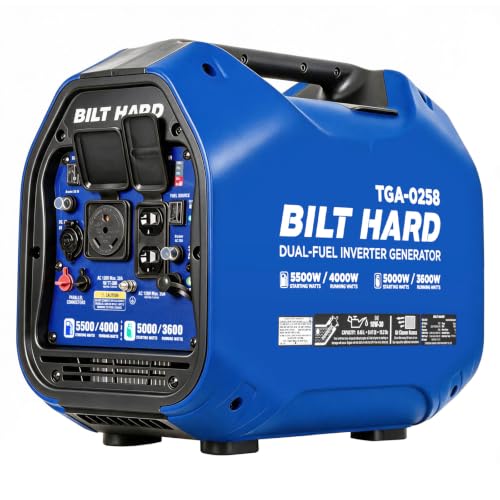
- Up to 4,000 running watts on gasoline
- Dual-fuel gasoline/LPG operation
- RV outlet, CO shutdown, and parallel capability
Best For: Home backup, RVs, camping, and outdoor power needs
Best Portable Power
4000W Camping Inverter Generator

- 4000 starting and 3400 running watts
- 30A, 120V AC, and 12V DC outputs
- Up to 6.5 hours at 50% load
Best For: Camping, outages, and outdoor backup power
Best Whole-Home Solar Setup
13.2kW 48V Hybrid Solar Inverter

- 13,200W pure sine wave AC output
- Dual MPPT with up to 16,000W PV input
- Supports battery-free and 48V battery operation
Best For: 230V solar and whole-home backup installations
Best Lightweight Option
WEN 2500W Portable Inverter Generator

- 2500 surge and 1900 rated watts
- 37.5-pound compact design
- 120V outlets plus two 5V USB ports
Best For: Lightweight camping and small electronics backup
High-Capacity Fuel Backup – WEN DF680iX Dual-Fuel Inverter Generator
For shoppers comparing off-grid inverter generators, the WEN DF680iX stands out as a high-output dual-fuel option with gasoline and propane operation. It delivers up to 6,800 surge watts on gasoline, includes RV-oriented connections, and adds electric starting and carbon-monoxide protection.
Best For: RV use, backup power, and users who want flexible gasoline or propane fueling.
Pros:
- Dual-fuel output reaches 5,100 rated watts on gasoline and 4,500 rated watts on propane.
- Bonded-neutral 240V configuration supports low-power Level 2 charging for battery and hybrid electric vehicles.
- Fuel shutoff, CO Watchdog, wheels, telescoping handle, and electric start add practical convenience.
- Includes an RV TT-30R outlet, 120V/240V receptacle, USB ports, and a three-year warranty.
Cons:
- At 99.2 pounds, it is considerably heavier than many portable generator options.
- Listed runtime is six hours, so extended operation requires refueling.
The DF680iX is a strong fit when output capacity and fuel flexibility matter more than minimum weight. Its broad outlet selection also makes it versatile for campsites and emergency backup.
Solar Power Hub – SUNGOLDPOWER 10KW 48V Solar Inverter
The SUNGOLDPOWER SPH10048P is a stationary 48V solar inverter rather than a fuel-powered generator, making it a compelling component for off-grid inverter generators and battery-based energy systems. Its 10,000W pure sine wave output, dual MPPT controllers, and split-phase capability are designed for substantial home or workshop loads.
Best For: Permanent 48V solar installations requiring high output, battery charging, and 120V/240V flexibility.
Pros:
- Provides 10,000W rated output with up to 20,000W peak power.
- Built-in dual MPPT solar control and up to 200A battery charging simplify system design.
- Supports split-phase 120V/240V or single-phase 120V output.
- Compatible with AGM, sealed, gel, flooded, lithium, and user-configured battery types.
Cons:
- Requires a separate 48V battery and solar installation for stored off-grid energy.
- Its 54-pound, 26-inch-long form factor is intended for fixed installation rather than casual portability.
With multiple charging and output modes plus time-slot scheduling, this inverter offers useful control over solar, utility, and battery power. It is best evaluated as the core of a larger off-grid system, not as a standalone portable generator.
Quiet RV Companion – WEN DF480iX Quiet Dual-Fuel Inverter Generator
The WEN DF480iX offers a practical balance for shoppers seeking off-grid inverter generators that are easier to move and quieter to operate. This dual-fuel model produces clean inverter power, runs on gasoline or propane, and is rated for up to 4,000 running watts.
Best For: Camping, RV power, and residential backup where lower noise and portability are priorities.
Pros:
- Dual-fuel operation provides up to 4,800 surge watts on gasoline or 4,320 on propane.
- Quiet operation is described as comparable to a normal conversation.
- Clean power is suitable for sensitive electronics such as phones, tablets, and laptops.
- Includes an RV outlet, USB ports, wheels, telescoping handle, fuel shutoff, and CO Watchdog.
Cons:
- Its 4,000-watt running output is lower than the larger WEN DF680iX.
- The listed 1.9-gallon tank and seven-hour runtime may require planning for long outages.
At 78.5 pounds, the DF480iX remains substantial but is more manageable than higher-output alternatives. Its quiet operation, clean inverter power, and RV-ready layout make it a well-rounded choice for mobile use.
Compact Solar Hybrid – SUMRY HGX 4000W 24V Hybrid Solar Inverter
The SUMRY HGX is a 24V hybrid solar inverter for building an off-grid power system around panels and batteries. It combines 4,000W pure sine wave output with a 140A MPPT charge controller, supports battery-free daytime operation under specified conditions, and offers configurable solar, battery, or utility priorities.
Best For: Small off-grid homes, workshops, and backup systems using 24V batteries or daytime solar power.
Pros:
- Delivers 4,000W rated output and up to 8,000W peak power.
- Built-in 140A MPPT controller supports up to 5,600W of PV input and 350VDC.
- Pure sine wave output is designed for sensitive and inductive appliances.
- Large LCD display, touch controls, multiple protections, and battery or battery-free operating options add flexibility.
Cons:
- Uses a 24V battery system, which may be less suitable for higher-capacity installations than 48V designs.
- Battery-free operation has specific PV-voltage and grid-connection conditions.
- The one-year manufacturer warranty is shorter than the warranties listed for the WEN generators.
The HGX is a compact control center for solar-first power setups, especially where 24V equipment is already available. Buyers should follow the manual closely and size panels, batteries, and loads within its stated limits.
Quiet Dual-Fuel Pick – WEN DF360iX
For shoppers comparing off-grid inverter generators, the WEN DF360iX offers flexible gasoline or propane operation in a relatively quiet, portable package. Its inverter output is designed for sensitive electronics, while the RV-ready outlet and fuel shut-off add practical versatility.
Best For: RV owners, campers, and off-grid users who want dual-fuel flexibility, quiet operation, and electronic-friendly power.
Pros:
- Runs on gasoline or propane, with up to 3,600 surge watts on gasoline.
- Produces clean inverter power for devices such as laptops, tablets, and smartphones.
- Includes an RV TT-30R outlet, USB ports, CO Watchdog shutdown, and fuel shut-off.
Cons:
- Rated output is lower on propane than on gasoline.
- The supplied notes do not specify an electric-start feature.
The DF360iX is a practical choice when portability, quieter operation, and fuel flexibility matter more than maximum output. Its safety and connection features make it especially well suited to RV and campsite use.
Solar Integration Pick – 4200W 24V Hybrid Inverter
This 24V hybrid inverter takes a different approach to off-grid inverter generators by combining battery storage, solar charging, and 120V AC output in one system. Its high-voltage MPPT input and configurable source priorities suit permanent off-grid installations more than quick portable power needs.
Best For: Off-grid cabins, workshops, RVs, and small energy systems using 24V battery banks and solar panels.
Pros:
- Provides 4,200W of continuous pure sine wave 120V output.
- Supports up to 6,200W of PV input with a 500V maximum PV open-circuit voltage.
- Offers up to 120A solar charging and multiple utility, solar, and battery priority modes.
Cons:
- Requires a 24V battery bank and compatible solar-system design.
- Installation should be completed by qualified personnel with correctly sized protection and cabling.
- This is a system inverter rather than a self-contained fuel generator.
Choose this model when solar harvesting and battery management are central to your off-grid setup. The display, communications ports, WiFi module compatibility, and five-year warranty add useful system-management potential, but installation planning is essential.
High-Output Portable Pick – BILT HARD 5500W Inverter Generator
Among off-grid inverter generators, the BILT HARD 5500W model stands out for its higher portable output and dual-fuel capability. It provides up to 4,000 running watts on gasoline, includes an RV outlet, and adds monitoring features for home backup, camping, and outdoor work.
Best For: Users needing substantial portable 120V power for home backup, RVs, camping, or jobsite-style outdoor use.
Pros:
- Delivers up to 5,500 starting watts and 4,000 running watts on gasoline.
- Supports gasoline and LPG, with economy mode to help reduce fuel use and noise under lighter loads.
- Includes TT-30R RV output, USB-A/USB-C connectivity, parallel capability, and CO auto-shutoff.
Cons:
- At 61.7 pounds, it is less convenient to move than a smaller portable generator.
- The supplied notes specify recoil start rather than electric start.
- LPG output is lower than gasoline output.
This BILT HARD model is a strong fit when running-watt capacity is the priority. Its digital display, protection features, and parallel-ready design improve usability, while dual-fuel operation gives you another option when gasoline availability is limited.
Best Portable Power – 4000W Camping Inverter Generator
For shoppers comparing off-grid inverter generators for camping, outages, or outdoor work, this 4000W gas model offers a practical balance of capacity and portability. Its 208cc engine provides 4000 starting watts and 3400 running watts, while output under 3% THD is suited to refrigerators, lights, chargers, laptops, and other compatible appliances.
Best For: Camping, emergency backup, and outdoor use where a portable 120V generator with a 30A outlet is useful.
Pros:
- Provides 4000 starting watts and 3400 running watts with under 3% THD.
- Offers a 30A outlet, two 120V AC outlets, and a 12V DC port.
- 2-gallon tank supports up to 6.5 hours at 50% load, with ECO mode to help reduce fuel use.
- Includes overload protection, low-oil shutdown, and a 2-year home-use warranty.
Cons:
- Its 55-pound open-frame design is less compact than smaller inverter generators.
- Actual runtime depends on load and may be lower than the advertised maximum.
- It is gasoline-powered, so fuel storage and refueling are required.
This model is a strong fit when you need more capacity than a small camping generator but still want inverter-style power and manageable transport. Keep total demand within its 3400-running-watt rating.
Best Whole-Home Solar Setup – 13.2kW 48V Hybrid Solar Inverter
This Y&H hybrid inverter is designed for larger solar installations rather than portable fuel-powered use. Among off-grid inverter generators and backup systems, it stands out for combining dual MPPT solar charging, 48V battery support, grid and generator input, and battery-free operation when sufficient solar or grid power is available.
Best For: 230V whole-home, farm, or backup installations using solar panels with optional 48V battery storage.
Pros:
- Delivers 13,200W of rated pure sine wave AC output.
- Dual MPPT inputs support up to 16,000W of PV input and help manage separate arrays.
- Supports lead-acid, gel, and LiFePO4 batteries, plus battery-free operation under suitable conditions.
- Includes BMS communication, optional remote monitoring, dual AC outputs, and multiple safety protections.
Cons:
- It is intended for single-phase 230V/240V loads and is not compatible with 110V or 120V US split-phase appliances.
- A suitable 48V battery bank is required when stored-energy backup is desired.
- Its high-power, wall-mounted design is better suited to a planned installation than casual portable use.
This is the most capable choice here for a permanent solar-plus-backup system, provided your electrical setup matches its 230V requirement. Verify voltage, load requirements, and installation compatibility before buying.
Best Lightweight Option – WEN 2500W Portable Inverter Generator
WEN 2500-Watt Inverter Generator, Quiet, Portable, and Lightweight with Fuel Shut Off (56250i)
Check Price On AmazonFor lightweight camping and basic backup needs, the WEN 56250i is a compact alternative to larger off-grid inverter generators. Its 80cc engine produces 2500 surge watts and 1900 rated watts, with clean power for sensitive electronics such as phones, tablets, and laptops.
Best For: Lightweight camping, compact storage, and powering small electronics or modest household essentials.
Pros:
- Weighs 37.5 pounds for easier transport and storage.
- Produces clean inverter power for compatible sensitive electronics.
- Includes two 120V receptacles, two 5V USB ports, and an onboard hour meter.
- Fuel shutoff helps use remaining carburetor fuel before shutdown, and the unit includes a 3-year limited warranty.
Cons:
- Its 1900-watt rated output is lower than larger generators, limiting the appliances it can run.
- The 1-gallon tank is listed for a 4-hour runtime, depending on operating conditions.
- It uses recoil start and does not list a 30A outlet or 12V DC output.
This WEN is a sensible pick when portability and simple electronics charging matter more than high output. Check the running wattage of every connected device before relying on it for outage power.
How We Picked These Off-Grid Inverter Generators
We selected products that address the main off-grid power scenarios: portable camping, RV use, emergency backup, and permanent or semi-permanent solar installations. The lineup includes gasoline and dual-fuel inverter generators as well as 24V and 48V hybrid solar inverters. We considered rated output, fuel flexibility, portability, waveform quality, charging capability, solar input, transfer options, and safety features such as carbon-monoxide monitoring.
Specifications vary by model and operating mode, so confirm the manufacturer’s continuous and peak wattage ratings before purchase. A generator’s advertised maximum output is not the same as the power it can sustain continuously.
Quick Comparison
- Portable RV and campsite power: The WEN and BILT HARD dual-fuel models offer a practical balance of mobility, runtime flexibility, and recreational-vehicle compatibility.
- Lower-power portable use: The WEN 2500-watt and 3600-watt models suit lights, electronics, small appliances, and moderate camping loads.
- Higher-output portable backup: The WEN 4800-watt, 5500-watt, and 6800-watt options provide more headroom for larger appliances and demanding startup loads.
- Solar and battery systems: The SUMRY, 4200W, SUNGOLDPOWER, and Y&H units are designed for integrated solar, battery, and AC power systems rather than simple plug-and-play use.
Key Buying Factors for Off-Grid Inverter Generators
Power Output and Surge Capacity
List every device you expect to run at once, then add its running watts. Motors in refrigerators, pumps, compressors, and power tools may need substantially more wattage during startup. Choose a unit with reserve capacity instead of sizing it exactly to your calculated load.
Fuel Type, Runtime, and Portability
Dual-fuel generators can run on gasoline or propane, giving you more storage and fuel options. Gasoline typically offers convenient high-output operation, while propane stores longer and may be easier to keep on hand. Check weight, wheels, handles, noise ratings, and expected runtime at partial load if you plan to move the unit frequently.
Inverter Quality and Electrical Compatibility
Pure sine wave output is preferable for sensitive electronics, modern chargers, medical equipment, and appliances with variable-speed motors. For RVs, verify the outlet type and whether the generator supports the required 30A or 50A connection. For solar inverters, confirm battery voltage, chemistry, maximum charging current, MPPT voltage range, AC input, and output voltage before installation.
Safety and Installation
Never operate a fuel-burning generator indoors, in a garage, or near doors and windows. Use carbon-monoxide protection and follow grounding, ventilation, transfer-switch, and electrical-code requirements. Hybrid solar inverters may require professional installation, correctly sized cables, disconnects, battery protection, and compatible battery-management communication.
Who Should Buy Which Off-Grid Inverter Generators?
Choose a compact WEN model for quiet, lightweight camping and basic electronics. Choose a mid- or high-output dual-fuel generator for RV air conditioning, tools, refrigerators, or emergency loads where portability still matters. Choose a solar hybrid inverter if you are building a battery-backed system and want solar charging, automatic power management, or reduced fuel dependence.
Before ordering, compare your actual load profile with continuous output, confirm connector and voltage requirements, and plan fuel storage or battery capacity. The best Off-Grid Inverter Generators are the ones that match both your peak demand and the way you realistically intend to use and maintain them.