Reliable power can make an RV trip more comfortable, especially when you are camping without hookups or traveling beyond established campgrounds. The right portable power station can charge phones and laptops, run small appliances, support medical devices, and keep essential gear operating during outages.
These 10 options cover a wide range of capacities, output levels, charging speeds, and budgets. Use the buying guide below to match battery size and inverter performance to the way you camp.
Best 10 Portable Power Stations for RVs Picks for 2026
Best High-Capacity Pick
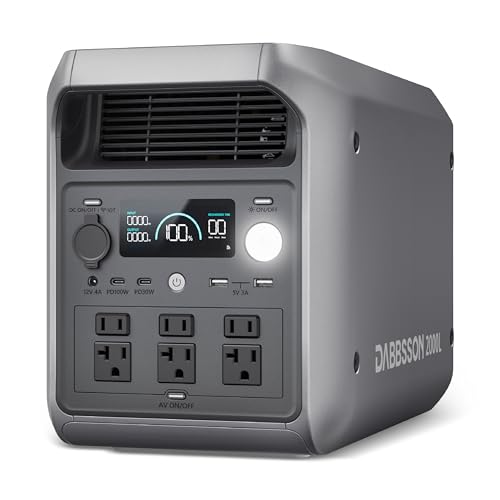
- 2,048Wh capacity in a 41-pound design
- 2,200W output with 3,300W Power Boost
- One-hour AC charging plus solar and car inputs
Best For: RVers seeking high capacity and fast charging
Best Lightweight Option
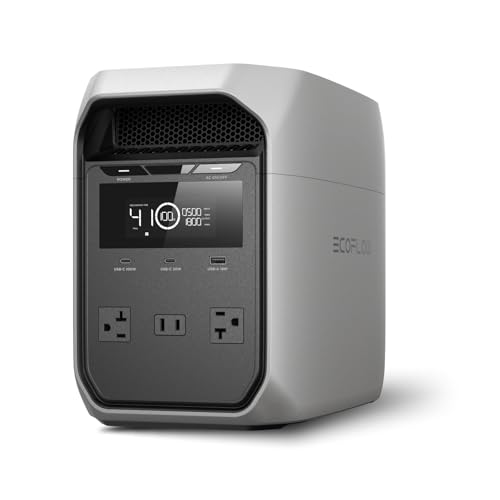
- 26.7-pound design for easier RV storage
- 1,800W output with 3,600W surge capability
- 80% charge in 45 minutes with optional solar input
Best For: RVers who value portability and quick top-ups
Best Quiet High-Output Pick

- 2,048Wh LFP battery with 3,000W output
- Up to 30 dB operation for quieter RV use
- 15 ports and expansion up to 22.5kWh
Best For: RVers wanting quiet, powerful group charging
Best for Extended Backup

- 3,072Wh battery with 3,600W output
- Expandable to 24kWh for longer outages
- Solar and generator recharging support
Best For: Long-stay RVers needing expandable backup power
Best Fast-Charging Pick

- 70-minute AC recharge
- 768Wh LFP battery with 800W output
- 17.2 lb design with solar input
Best For: RVers who want quick charging and easy portability
Best High-Power Option

- 1024Wh LFP battery
- 2600W maximum output
- 26 dB quiet operation
Best For: RVers running demanding appliances and tools
Best for Comfort

- 7.5 lb portable design
- 292Wh capacity with 300W output
- Six connections including USB-C and car port
Best For: RVers needing compact power for electronics and small devices
Fast-Charging RV Upgrade

- 600W output with 1500W Power Lifting Mode
- 0–80% wall charge in 45 minutes
- 10ms UPS and eight charging modes
Best For: RVers needing fast recharging and moderate device backup
Lightweight Budget Companion
MARBERO M823 300W Power Station

- Only 4.6 pounds
- Eight outlets plus built-in LED lights
- Wall, car, or optional solar charging
Best For: Lightweight RV trips, camping, and emergency lighting
Best High-Capacity Pick – DABBSSON 2000L
The DABBSSON 2000L is a strong option for shoppers comparing portable power stations for RVs and wanting substantial capacity without an especially bulky design. Its 2,048Wh battery, 2,200W continuous output, and six AC outlets suit extended off-grid trips and emergency backup.
Best For: RVers who need long runtime, high output, and fast recharging in a relatively lightweight 41-pound unit.
Pros:
- 2,048Wh capacity with a claimed 1.3x longer runtime than comparable stations
- 2,200W continuous output and up to 3,300W Power Boost for demanding appliances
- Full AC recharge in about one hour, plus solar and 12V car-charging options
- LiFePO4 battery, 4,000+ cycles to 80% capacity, app control, and under-15ms EPS
Cons:
- Solar panels are optional rather than included
- At 41 pounds, it is portable but still substantial for frequent lifting
For RV use, the DABBSSON balances capacity, appliance support, and recharge flexibility well. Its fast AC charging and included car cable are especially practical when moving between campsites, while the five-year warranty adds reassurance for regular use.
Best Lightweight Option – EcoFlow DELTA 3 Classic
The EcoFlow DELTA 3 Classic is a compact choice among portable power stations for RVs, weighing 26.7 pounds while providing 1,024Wh of capacity and 1,800W of AC output. It is suited to everyday travel power, smaller appliances, and electronics.
Best For: RV campers who prioritize lower weight, quick charging, and smart monitoring over maximum battery capacity.
Pros:
- 26.7-pound form factor is easier to move and store in an RV
- 1,800W output with 3,600W surge capacity and X-Boost support
- Reaches 80% charge in 45 minutes and supports 500W solar charging
- LiFePO4 battery, under-10ms UPS, and EcoFlow app control
Cons:
- Its 1,024Wh capacity is lower than the other high-capacity options here
- Not compatible with DELTA 2 Smart Extra Battery or Delta 3 Series Smart Extra Battery
The DELTA 3 Classic makes sense when portability is central to your RV setup. It can handle many common appliances and recharges quickly, but travelers needing extended runtimes or expansion should account for its smaller capacity and stated battery compatibility limitations.
Best Quiet High-Output Pick – DJI Power 2000
The DJI Power 2000 is designed for RVers who want substantial capacity, strong appliance support, and low operating noise. Its 2,048Wh LFP battery, 3,000W output, 15 ports, and claimed noise level as low as 30 dB make it a versatile option for shared camping spaces.
Best For: RV households needing quiet nighttime operation, many charging connections, and the ability to expand storage later.
Pros:
- 3,000W stable output is rated to run 99% of appliances according to the supplied notes
- Recharges to 80% in 55 minutes
- 15 ports, including dual full SDC ports, for charging multiple devices
- Quiet operation as low as 30 dB, 10ms UPS, and expansion support up to 22.5kWh
Cons:
- Solar and car charging require separate compatible adapters because modules are not built in
- Expansion batteries are sold separately
- The listed manufacturer warranty is one year
The DJI Power 2000 is compelling when quiet comfort and high output matter as much as capacity. Its port selection suits group trips, but the added adapter requirement for solar or car charging should be included in the RV setup budget.
Best for Extended Backup – Anker SOLIX F3000
The Anker SOLIX F3000 is a large, expandable power system for RV owners who need more than a weekend charging solution. It combines a 3,072Wh battery with 3,600W output, generator readiness, solar input, and expansion potential up to 24kWh.
Best For: Stationary or long-stay RV setups that need extended backup power and support for higher-demand appliances.
Pros:
- 3,072Wh capacity and 3,600W output for substantial appliance coverage
- Expandable to 24kWh with additional batteries
- Supports 165V or 60V solar inputs and generator recharging
- Can provide up to 125 hours of AC idle standby time or run a 190W refrigerator for 42 hours, according to the supplied notes
Cons:
- At 91.5 pounds, it is considerably heavier than the other listed options
- Its larger dimensions may require a dedicated RV storage location
- Some advanced backup features require additional equipment or batteries
The F3000 is best viewed as a high-capacity RV power hub rather than a grab-and-go battery. Its weight limits casual portability, but the larger battery, expansion capability, and generator-ready design make it better suited to extended stays and serious backup planning.
Best Fast-Charging Pick – EcoFlow RIVER 2 Pro
For RV owners comparing portable power stations for RVs, the EcoFlow RIVER 2 Pro stands out for rapid charging, a durable LFP battery, and a relatively light 17.2-pound design. Its 768Wh capacity, 800W output, and X-Boost mode provide useful flexibility for camping appliances and everyday electronics.
Best For: RVers who prioritize fast recharging, portability, and long battery life.
Pros:
- Recharges from an AC outlet in about 70 minutes.
- LFP battery supports more than 3,000 cycles before reaching 80% capacity.
- Supports up to 220W solar input and includes 11 outlets.
- Lightweight design with a built-in handle and five-year service.
Cons:
- Its 800W rated output is lower than larger high-capacity stations.
- Solar panels are optional rather than included.
The RIVER 2 Pro is a practical middle ground for RV trips: faster to replenish than many smaller units and easier to carry than heavy-duty models. It is best suited to electronics and moderate loads rather than sustained use of multiple high-wattage appliances.
Best High-Power Option – DJI Power 1000 V2
The DJI Power 1000 V2 is a strong choice among portable power stations for RVs when high output and quiet operation matter. Its 1024Wh LFP battery, 2600W maximum output, rapid 0-to-80% charging, and 26 dB low-noise operation make it suitable for demanding campsite or camper-van use.
Best For: RVers who need substantial power for appliances, tools, and nighttime charging.
Pros:
- Reaches 80% charge in about 37 minutes.
- 1024Wh LFP battery is designed for a 10-year lifespan.
- Runs as quietly as 26 dB for less nighttime disruption.
- Includes dual 140W USB-C ports and a five-year warranty.
Cons:
- At 15 kg, it is considerably heavier than compact RV power stations.
- Solar and car charging require separate compatible adapters because the modules are not built in.
- It has four total power outlets.
With its high output and larger battery, the Power 1000 V2 is better equipped for power-hungry RV equipment than compact alternatives. Its weight and adapter requirements are the main trade-offs for shoppers seeking a more capable station.
Best for Comfort – Jackery Explorer 300
For RVers who want a compact backup for personal electronics, the Jackery Explorer 300 is one of the more portable portable power stations for RVs. It weighs about 7.5 pounds, provides 292Wh of capacity and 300W rated output, and includes AC, USB, and 12V car-port connections.
Best For: Lightweight RV travel, phones, laptops, cameras, and CPAP-style camping backup.
Pros:
- Compact 7.5-pound design is easy to pack and carry.
- Offers six device connections, including USB-C and a 120W car port.
- LiFePO4 battery supports more than 4,000 cycles before reaching 70% capacity.
- Can reach 80% charge in about 2.8 hours with a 100W solar panel.
Cons:
- 292Wh capacity and 300W output limit it to smaller electronics and light loads.
- Solar panel is optional.
- Orders require a physical delivery address rather than only a PO Box.
The Explorer 300 is a sensible grab-and-go option for RVers who mainly need to recharge devices or support small equipment. It is not intended to replace a larger station for kitchen appliances, heating devices, or extended high-draw use.
Compact LiFePO4 Pick – DYNESS 300W Portable Power Station
For buyers comparing portable power stations for RVs, the DYNESS 300W model offers a compact battery backup with a 256Wh LiFePO4 battery and a 110V pure sine wave AC outlet. Its 300W continuous output is suited to smaller electronics and select compact appliances.
Best For: RV and camping users who need lightweight backup power for laptops, routers, cameras, mini fridges, and other small devices.
Pros:
- LiFePO4 battery chemistry is designed for long cycle life and stable energy storage.
- Provides 300W continuous output with 600W starting wattage.
- Offers AC, USB-C, USB-A, DC, and car-output options.
- Supports AC, solar-panel, car, and dual-input charging.
Cons:
- Its 256Wh capacity and 300W output are intended for smaller loads rather than high-wattage RV appliances.
- The solar panel is optional rather than included.
The DYNESS is a practical fit when portability, LiFePO4 construction, and flexible charging matter more than maximum capacity. It is best matched with modest RV electronics and emergency essentials.
Fast-Charging RV Upgrade – BLUETTI Elite 30 V2
Among portable power stations for RVs, the BLUETTI Elite 30 V2 stands out for its 600W continuous output, 288Wh capacity, and compact 9.5-pound design. It also adds fast wall charging, multiple charging methods, and a UPS function for sensitive electronics.
Best For: RV travelers and emergency-preparedness buyers who want more output, rapid recharging, and backup support for devices such as laptops, CPAP machines, routers, and car fridges.
Pros:
- Delivers 600W continuous power and up to 1500W in Power Lifting Mode.
- Reaches 80% charge in 45 minutes and full charge in 70 minutes using adjustable wall charging.
- Supports AC, solar, car, lead-acid, and generator-powered charging options.
- 10ms UPS switching can help maintain power to compatible critical devices during outages.
Cons:
- The 288Wh capacity remains better suited to short-duration or moderate loads than extended high-power use.
- Power Lifting Mode does not change the unit’s 600W continuous rating.
The Elite 30 V2 is a strong choice for RV users who value charging speed and higher output in a small package. Its UPS capability further broadens its usefulness for home backup and sensitive electronics.
Lightweight Budget Companion – MARBERO M823 300W Power Station
The MARBERO M823 is a lightweight option for shoppers seeking portable power stations for RVs without carrying a bulky unit. It combines a 237Wh lithium-ion battery, 300W output, eight outlets, and built-in LED lighting in a 4.6-pound enclosure.
Best For: RV road trips, tent camping, and emergency kits where low weight, multiple USB connections, and built-in lighting are priorities.
Pros:
- At 4.6 pounds, it is easy to carry or store in a backpack.
- Includes two AC outlets, USB-A, USB-C, and DC outputs for several device types.
- Built-in top and side LED lights offer brightness and SOS modes.
- Can recharge from a wall outlet, 12V car adapter, or compatible solar panel.
Cons:
- Its 237Wh capacity is smaller than the other listed options.
- Solar charging requires a separately purchased panel.
- The 300W output is intended for electronics and lighter loads, not large RV appliances.
The M823 makes sense when easy portability and connection variety outweigh maximum capacity. Its lantern features are especially useful for campsite setup, roadside stops, and blackout preparation.
How We Picked the Best Portable Power Stations for RVs
We focused on the features that matter most in an RV: usable battery capacity, continuous and surge output, outlet selection, charging flexibility, portability, battery chemistry, and overall practicality. The lineup includes compact units for phones and small electronics, mid-size models for weekend camping, and high-capacity systems better suited to extended off-grid stays.
LiFePO4 batteries receive particular attention because they typically offer a long cycle life and strong thermal stability. We also considered solar input, AC charging speed, pure sine wave output, and whether a station is realistic to carry, store, or connect to an RV setup.
Quick Comparison
| Best For | Typical Capacity | What to Look For |
|---|---|---|
| Phones, cameras, and small electronics | 200–300Wh | USB-C, compact design, and low weight |
| Weekend RV trips | 700–1,100Wh | 800W or more of AC output and flexible recharging |
| Longer off-grid stays | 2,000Wh or more | High inverter output, solar compatibility, and expandable capacity |
| High-demand appliances | 1,500W–3,000W output | Strong continuous wattage, surge capability, and suitable connectors |
Key Buying Factors for Portable Power Stations for RVs
Battery Capacity and Runtime
Watt-hours indicate how much energy a station stores. A 250Wh model may cover phones, lights, and a laptop, while a 1,000Wh unit provides more flexibility for multiple devices. For refrigerators, CPAP machines, or repeated appliance use, consider 2,000Wh or more. Actual runtime is lower than the advertised capacity because of inverter and conversion losses.
Output and Outlet Compatibility
Check the continuous AC wattage, not just the peak figure. Confirm that it can handle the startup demands of your refrigerator, fan, coffee maker, or other equipment. Pure sine wave AC output is preferable for sensitive electronics. Also review the number of AC outlets, USB-C ports, USB-A ports, and 12V outputs.
Charging Options and Portability
Fast AC charging reduces downtime, while solar input helps when you are away from hookups. Verify the maximum solar wattage and connector type before buying panels. Weight matters in an RV: a large battery may offer more runtime but can be difficult to move. Handles, wheels, app controls, and a readable display can significantly improve daily use.
Who Should Buy Which Portable Power Stations for RVs?
Choose a compact 200–300Wh station if your priority is charging personal electronics and running lights on short trips. A 700–1,100Wh model is a better all-purpose choice for weekend RVers who want more reserve power without excessive weight. Extended boondockers should consider a 2,000Wh-plus unit with strong solar input and high AC output. If you regularly use heating appliances, induction cooking equipment, or other demanding loads, select the highest continuous wattage that fits your budget and storage space.