Reliable electricity is essential on a job site, but running extension cords to distant outlets or relying on a gas generator is not always practical. The best portable power stations for job sites provide quiet, emissions-free power for tools, chargers, lights, laptops, and other equipment.
We selected 10 models across several capacity and output levels, from compact units for light-duty tasks to high-capacity stations designed for demanding tools and longer outages. Use the guide below to match battery size, inverter power, charging speed, and portability to the work you actually do.
Best 10 Portable Power Stations for Job Sites Picks for 2026
Best High-Output Pick

- 2,048Wh LiFePO4 capacity
- 2,400W output; 3,400W X-Boost
- 0–80% charge in about 1.13 hours
Best For: Demanding job sites and high-draw tools
Best Large-Capacity Backup
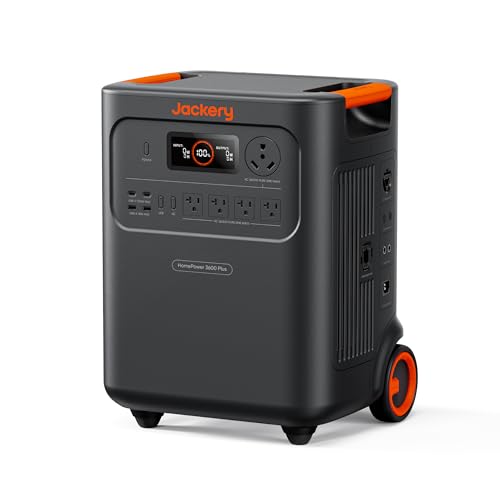
- 3,584Wh capacity and 3,600W output
- 7,200W output in parallel
- Wheels and telescoping handle
Best For: Extended backup and larger work areas
Best Lightweight 2kWh Option
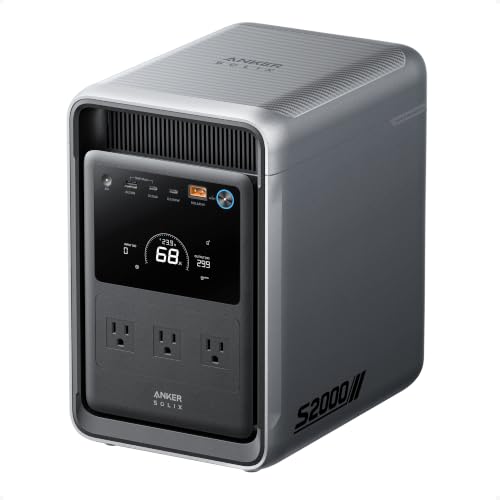
- 2,010Wh capacity in a 35.7-pound body
- 1,500W continuous; 3,000W peak
- Eight outlets and up to 400W solar input
Best For: Mobile crews and compact work setups
Best Balanced Job-Site Value
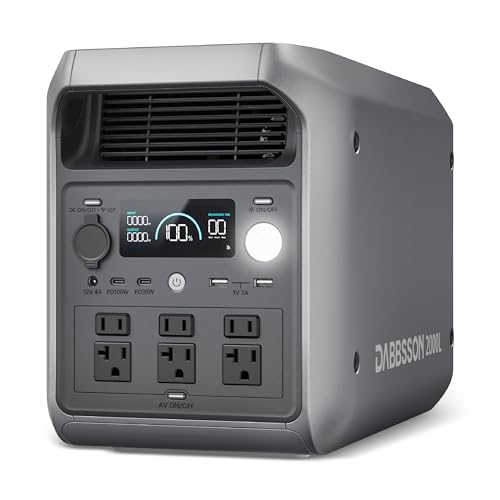
- 2,048Wh capacity and 2,200W output
- 3,300W Power Boost for heavier loads
- Six AC outlets and one-hour AC charging
Best For: Multi-device job sites and flexible recharging
Fast-Charging Jobsite Powerhouse

- 2,000W output and 4,500W surge capacity
- 0–80% AC charging in 36 minutes
- Expandable up to 5,120Wh
Best For: Fast turnaround and expandable jobsite power
Compact 2kWh Worksite Backup

- 2,042Wh capacity and 2,200W output
- 39.5-pound compact design
- Quiet charging and 20ms UPS switching
Best For: Portable worksite backup with low operating noise
High-Output Long-Run Station
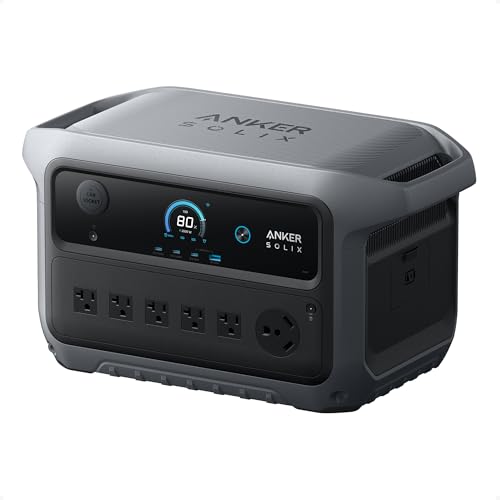
- 2,400W output with 4,000W peak power
- Full recharge in 58 minutes
- Expandable to 4kWh with an extra battery
Best For: High-demand tools and extended mobile runtime
Best Overall

- 1,800W AC output with 13-device support
- Full charge in as little as 56 minutes
- Expandable to 5kWh with compatible batteries
Best For: Contractors needing fast, expandable job-site power
Best High-Capacity Value

- 1,191Wh capacity with 1,200W pure sine output
- 14 outputs, including five AC outlets
- Wall, solar, and 12V vehicle charging
Best For: Mobile work setups needing capacity and port variety
Best Compact Option

- 600W output with 1,200W surge capability
- Full AC recharge in about 1.5 hours
- Eight ports and a 5-year warranty
Best For: Light-duty tools, chargers, and sensitive electronics
Best High-Output Pick – EcoFlow DELTA 3 Max
For demanding portable power stations for job sites, the EF ECOFLOW DELTA 3 Max combines a 2,048Wh LiFePO4 battery with 2,400W output and up to 3,400W in X-Boost mode. Its fast recharge and portable design make it useful when crews need substantial power without a fuel-powered generator.
Best For: Job sites, emergency backup, RV use, and users who need to run higher-demand tools or appliances.
Pros:
- 0–80% charging in about 1.13 hours with X-Stream technology
- Up to 3,400W X-Boost output for many high-demand appliances and power tools
- LiFePO4 battery designed for up to 10 years of daily use
- App control, quiet operation, and less-than-10ms transfer time
Cons:
- Solar panels are optional rather than included
- Its 19.44-inch height and high capacity may be less convenient for frequent one-person carrying
The DELTA 3 Max is a strong choice when output and recharge speed matter most. The five-year warranty and app monitoring add practical value for regular job-site or backup use.
Best Large-Capacity Backup – Jackery HomePower 3600 Plus
The Jackery HomePower 3600 Plus is a substantial option among portable power stations for job sites, offering 3,584Wh of capacity and 3,600W AC output. Its wheeled, luggage-style design helps offset the 77.2-pound weight when moving it around a property or between work areas.
Best For: Extended backup, larger work areas, pumps, heaters, dryers, and users who prioritize capacity over compactness.
Pros:
- 3,600W output with 7,200W capability when used in parallel
- Large 3,584Wh capacity, expandable with compatible configurations
- Hybrid AC+DC charging can reach full charge in about two hours
- Wheels and telescoping handle improve portability
Cons:
- At 77.2 pounds, it is considerably heavier than smaller job-site stations
- Only two outlets are listed in the supplied specifications
- Parallel operation and dual-voltage use require additional compatible setup
This model is better suited to rolling into position than carrying across a site. Choose it when long runtime and high output are more important than minimum size or weight.
Best Lightweight 2kWh Option – Anker SOLIX S2000
The Anker SOLIX S2000 offers 2,010Wh of storage and 1,500W continuous output in a notably compact 35.7-pound package. For portable power stations for job sites, its lighter build and eight outlets make it practical for crews moving between locations or powering several lower-draw devices.
Best For: Mobile crews, compact work setups, emergency use, and essential appliances that do not require more than 1,500W continuously.
Pros:
- 35.7-pound design is lighter than many comparable 2kWh stations
- Up to 35 hours of refrigerator runtime is claimed, depending on conditions
- 1,500W continuous and 3,000W peak output
- Supports up to 400W solar input and offers less-than-10ms switchover
Cons:
- No 12V DC port
- 1,500W continuous output is lower than the larger stations in this roundup
- Solar panels are not listed among the included components
The S2000 emphasizes portability and efficient everyday backup rather than maximum tool-starting power. It is a sensible fit when weight, outlet count, and long essential-device runtime matter most.
Best Balanced Job-Site Value – DABBSSON Power Station 2000L
The DABBSSON 2000L balances a 2,048Wh battery, 2,200W continuous output, and a 41-pound frame. Among portable power stations for job sites, it stands out for combining six AC outlets, fast charging, 12V car charging, and a power-boost mode for heavier equipment.
Best For: Job sites needing multiple outlets, power tools, flexible charging, and a relatively manageable high-capacity unit.
Pros:
- 2,200W continuous output with up to 3,300W Power Boost
- Six AC outlets and a full port set for powering several devices
- 2048Wh capacity can recharge in about one hour from AC
- Supports solar input up to 800W, car charging, and hybrid dual-input charging
Cons:
- Solar panels are optional
- 41-pound weight is heavier than compact alternatives
- The supplied specifications list a three-year warranty plus a two-year extended warranty, so coverage terms should be confirmed
The 2000L is a well-rounded choice for crews that need more continuous output than a lightweight 1,500W station but still want easier handling than a large home-backup model. Its port selection and one-hour AC charging are particularly useful during busy workdays.
Fast-Charging Jobsite Powerhouse – OUPES Mega 1
The OUPES Mega 1 is a strong choice among portable power stations for job sites when fast turnaround, high output, and expandable capacity matter. It provides 2,000W of continuous power, 4,500W surge capacity, and can recharge from 0% to 80% in 36 minutes through AC.
Best For: Contractors, mobile offices, film crews, and demanding work areas that need expandable power and fast recharging.
Pros:
- 2,000W continuous output with a 4,500W surge rating for power tools and other high-demand equipment.
- Fast 0–80% AC charging in 36 minutes, or 26 minutes with AC and solar together.
- Expandable from 1,024Wh to as much as 5,120Wh with two extra batteries.
- LiFePO4 battery rated for 3,500+ cycles and a UPS transfer time under 20ms.
Cons:
- Its 1,024Wh base capacity is smaller than the other 2kWh-class options here.
- Expansion batteries are needed to reach the advertised 5,120Wh capacity.
The Mega 1 stands out for jobsite users who value speed and flexibility. Its app control, bypass charging, pure sine wave output, and modular design make it particularly useful when equipment needs to stay productive throughout a long workday.
Compact 2kWh Worksite Backup – Jackery Explorer 2000 v2
The Jackery Explorer 2000 v2 offers a useful balance of capacity, output, and portability for portable power stations for job sites. Its 2,042Wh battery and 2,200W AC output can support tools, electronics, and small-business equipment, while its 39.5-pound design is relatively easy to move.
Best For: Crews that need substantial battery capacity in a compact unit with quiet charging and dependable backup functionality.
Pros:
- 2,042Wh capacity with 2,200W output through three AC ports.
- Relatively light and compact for a 2kWh-class power station at 39.5 pounds.
- AC charging reaches 80% in 66 minutes, with full charging possible in 102 minutes using Emergency Super Charging.
- Silent Charging mode operates below 30dB, and the UPS provides 20ms switching.
Cons:
- Its 2,200W output and 2,200W starting rating provide less surge headroom than the OUPES and Anker units.
- Solar charging requires compatible 400W panels and can take as little as six hours.
For teams that regularly move equipment between locations, the Explorer 2000 v2 is an appealing portable option. It combines a sizable LiFePO4 battery with quiet operation and UPS capability, though users running especially demanding startup loads may prefer a higher surge rating.
High-Output Long-Run Station – Anker SOLIX C2000 Gen 2
The Anker SOLIX C2000 Gen 2 is built for portable power stations for job sites where long runtime, strong output, and multiple recharge options are priorities. Its 2,048Wh LiFePO4 battery delivers 2,400W continuously and up to 4,000W peak power for demanding equipment.
Best For: Jobsite teams needing extended runtime, high starting power, and flexible charging from AC, solar, or a vehicle.
Pros:
- 2,400W rated output and 4,000W peak power for running multiple appliances or most window and RV air conditioners.
- Recharges fully in 58 minutes using AC and solar charging.
- Can expand from 2,048Wh to 4kWh with an additional battery.
- 800W alternator charging can reach full capacity in three hours, and standby consumption is rated at only 9W.
Cons:
- The expansion battery is required to reach the 4kWh capacity.
- At 41.7 pounds, it is slightly heavier than the Jackery Explorer 2000 v2.
- Supplied specifications list one total power outlet, so outlet configuration should be confirmed before purchase.
The C2000 Gen 2 is a compelling fit when a work crew needs both high peak output and efficient long-duration operation. Its rapid charging and alternator input are especially useful for mobile jobs, while the five-year warranty adds value for frequent users.
Best Overall – EF ECOFLOW DELTA 3
The EF ECOFLOW DELTA 3 is a strong all-around choice among portable power stations for job sites, combining an 1,800W AC output with rapid recharging and a durable LiFePO4 battery. Its expandable capacity and multiple ports make it practical for demanding workday setups and backup power.
Best For: Contractors who need fast charging, expandable capacity, and enough output for multiple tools and devices.
Pros:
- Reaches a full charge in as little as 56 minutes with supported AC and solar input.
- Supplies up to 1,800W continuously and supports 13 appliances simultaneously.
- LiFePO4 battery is rated for 4,000 cycles to 80% capacity and includes a 5-year warranty.
- Can expand from 1kWh to up to 5kWh with compatible EcoFlow batteries.
Cons:
- At 12.5 kg, it is less convenient to carry than smaller power stations.
- Expansion batteries are required to reach the maximum stated capacity.
Choose the DELTA 3 if job-site flexibility matters more than minimum size. Its fast recharge options, high output, and expansion support give it room to handle changing power demands.
Best High-Capacity Value – UDPOWER S1200
The UDPOWER S1200 offers a 1,191Wh battery and 1,200W continuous pure sine wave output, making it a practical option among portable power stations for job sites. Its broad port selection and three charging methods support tools, electronics, and mobile work setups.
Best For: Job-site users who want substantial capacity, multiple connection options, and occasional UPS backup for sensitive electronics.
Pros:
- Provides 1,191Wh of capacity and 1,200W continuous output.
- Includes 14 outputs, including five AC outlets, USB-C, USB-A, DC, and a car outlet.
- Supports wall charging, up to 400W solar input, and 12V vehicle charging.
- LiFePO4 battery is rated to retain at least 80% capacity after 3,000 cycles.
Cons:
- Its 1,200W output is lower than the DELTA 3’s rating for higher-demand equipment.
- UPS operation is intended for compatible electronics and should be checked before critical use.
The S1200 balances capacity and connectivity without relying on an expansion system. It is a sensible fit when your equipment stays within the 1,200W limit and you value flexible recharging.
Best Compact Option – LIBRIDS 640Wh Power Station
The LIBRIDS 640Wh power station is a compact choice among portable power stations for job sites, delivering 600W of continuous output with 1,200W surge capability. Its fast 1.5-hour AC recharge, pure sine wave inverter, and metal enclosure suit lighter-duty tools and essential electronics.
Best For: Smaller crews and mobile workers who need quick, quiet power for electronics, chargers, and moderate loads.
Pros:
- Fully recharges from AC power in about 1.5 hours.
- Offers four AC outlets and eight total output ports for multiple devices.
- Pure sine wave output is designed for sensitive electronics, including laptops and CPAP machines.
- LiFePO4 battery is rated for more than 4,000 cycles and backed by a 5-year warranty.
Cons:
- Its 600W continuous output is not intended for heavier job-site equipment.
- The product is labeled for indoor use only and must be protected from rain, moisture, and precipitation.
- At 640Wh, it provides less stored energy than the other two options.
The LIBRIDS is best viewed as a compact electronics and light-duty power source rather than a replacement for a high-output generator. Its fast recharge and small footprint are useful when portability takes priority.
How We Picked the Best Portable Power Stations for Job Sites
We compared the selected models by battery capacity, continuous AC output, surge capability, charging options, battery chemistry, portability, and practical job-site features. Capacity indicates how much energy a station stores, while continuous output determines which tools and devices it can run at the same time. We also considered whether each unit supports wall, vehicle, and solar charging, since flexible recharging can matter when power is unavailable for an entire workday.
Specifications should be treated as starting points rather than guarantees. Actual runtime varies with tool load, inverter efficiency, temperature, battery age, and whether multiple devices are connected.
Quick Comparison
The 1,000Wh-class stations are generally easier to move and suitable for lights, chargers, networking equipment, and lighter tools. Models around 2,000Wh provide a better balance for cordless-tool charging, electronics, and intermittent use of higher-draw equipment. The 3,000Wh-plus options are better for extended shifts, larger tool loads, and backup power when frequent recharging is difficult.
For demanding equipment, prioritize a continuous rating that exceeds the tool’s running wattage, not merely its advertised surge rating. Motors, compressors, saws, and pumps may require a brief startup surge that can trip an undersized inverter.
Key Buying Factors for Portable Power Stations for Job Sites
Capacity and Runtime
Estimate the watt-hours your equipment uses during a typical shift. A 1,024Wh station will not deliver a full 1,024Wh to AC devices because conversion losses reduce usable energy. Choose additional capacity if you need overnight backup, charge several batteries, or run equipment continuously.
Output and Surge Performance
Check continuous AC wattage, peak or surge output, outlet count, USB ports, and DC connections. High-wattage tools may need more inverter headroom than their normal operating rating suggests. Also verify voltage and connector compatibility before buying.
Battery Chemistry and Durability
LiFePO4 batteries are popular for work use because they typically offer long cycle life and strong thermal stability. Look for a robust enclosure, clear temperature protections, a useful warranty, and an operating temperature range suited to your environment.
Charging and Portability
Fast AC charging minimizes downtime, while solar and vehicle charging add flexibility on remote sites. Wheels, telescoping handles, and manageable weight can be more valuable than maximum capacity if the station must be moved frequently.
Who Should Buy Which Portable Power Stations for Job Sites?
Choose a compact 640Wh to 1,200Wh model for light-duty crews that mainly need lighting, communications, laptops, tool batteries, and occasional small-tool use. A 2,000Wh-class station is the better all-around choice for contractors who want meaningful runtime and enough output for many common job-site tools. Select a 3,000Wh-plus model when extended runtime, multiple simultaneous loads, or fewer charging interruptions matter most.
Before purchase, list the wattage of your highest-draw tool, estimate total daily energy use, and confirm the station’s weight and charging method fit your workflow. If you routinely operate large compressors, welders, heaters, or other extreme loads, compare their startup requirements carefully and consider whether a dedicated generator or site power connection is more appropriate.