When an outage lasts for hours or days, a portable power station can keep essential devices running without the noise, fuel, or maintenance of a traditional generator. The right model depends on your power needs, battery capacity, recharge options, and the appliances you plan to use.
We selected 10 options ranging from compact 640Wh units to high-capacity systems above 3,500Wh. Use the guide below to compare the features that matter most before choosing a dependable backup for your home, travel, or emergency kit.
Best 10 Portable Power Stations for Long Outages Picks for 2026
Best for Whole-Home Backup

- 3,600W output for demanding appliances
- 3,584Wh capacity with expansion options
- Wheels and telescoping handle
Best For: Extended household outages and high-load appliances
Best Compact 2kWh Value

- 2,010Wh capacity and 1,500W output
- 35-hour stated refrigerator runtime
- 35.7-pound compact design
Best For: Efficient essential-load backup with easier handling
Best Lightweight High-Output Pick

- 2,200W output from a 2,042Wh battery
- 39.5-pound compact design
- 20ms UPS switching and fast charging
Best For: High-output emergency backup in a portable package
Best Fast-Charging Midrange Option

- 1,800W output with 1,152Wh capacity
- Full AC recharge in about one hour
- 500W solar input and 20ms UPS
Best For: Fast-recharge essential backup and outdoor use
Fast-Charging Powerhouse

- 1,056Wh LiFePO4 battery with 1,800W output
- 80% charge in about 43 minutes
- 11 ports and up to 600W solar input
Best For: Fast emergency backup and versatile camping power
Smart UPS Backup
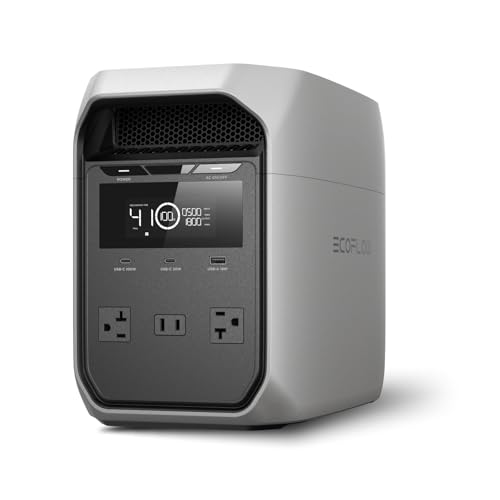
- 1,024Wh capacity with 1,800W output
- Under-10ms UPS switching for sensitive electronics
- 0–80% AC charging in about 45 minutes
Best For: Home backup for appliances and critical electronics
Lightweight Long-Life Choice

- 1,070Wh capacity with 1,500W output
- 23.8-pound design with foldable handle
- Up to 4,000 battery cycles and 100W USB-C
Best For: Portable emergency backup, camping, and road trips
Top-Rated High-Capacity Pick

- 1,800W output and 1,024Wh LiFePO4 capacity
- 80% charge in about 45 minutes
- 10ms UPS and app control
Best For: Home backup, camping, and high-demand essentials
Best Compact UPS Value
LIBRIDS 640Wh Portable Power Station

- 600W output with 1,200W surge power
- Full recharge in about 1.5 hours
- 10ms UPS and pure sine wave output
Best For: Routers, CPAP machines, and smaller essential loads
Best Solar-Ready Essentials Backup
1000W 1024Wh LiFePO4 Power Station

- 1,000W output with 1,024Wh capacity
- Up to 300W solar input
- 60W USB-C PD and five-device charging
Best For: Essential home backup, camping, RVs, and remote work
Best for Whole-Home Backup – Jackery HomePower 3600 Plus
For shoppers comparing portable power stations for long outages, the Jackery HomePower 3600 Plus stands out when you need substantial capacity and high output. Its 3,584Wh battery, 3,600W AC output, expandable storage, and dual-voltage capability are designed for extended household backup.
Best For: Households that need to run demanding appliances and want expandable backup capacity.
Pros:
- 3,600W output can handle pumps, heaters, and dryers.
- 3,584Wh capacity can expand to 21kWh per unit or 43kWh with multiple units.
- LFP battery cells are rated for 6,000 cycles and a 10-year lifespan.
- Wheels and a telescoping handle improve portability for a 77.2-pound unit.
Cons:
- At 77.2 pounds, it is much heavier than smaller power stations.
- Its full-home potential may require compatible transfer equipment and setup.
The HomePower 3600 Plus is the strongest fit here for extended residential outages, especially when appliance coverage and expandable capacity matter more than compact size.
Best Compact 2kWh Value – Anker SOLIX S2000
The Anker SOLIX S2000 is a practical middle ground for portable power stations for long outages, combining a 2,010Wh battery with 1,500W continuous output in a relatively compact 35.7-pound design. Its low idle draw and stated 35-hour refrigerator runtime can help stretch stored energy.
Best For: Users who want extended refrigerator and essential-device runtime without carrying a full-size home backup unit.
Pros:
- 2,010Wh capacity and 1,500W continuous output support many essential appliances.
- Low 6W idle draw and higher efficiency are designed to extend runtime.
- Compact 35.7-pound body is lighter than many comparable 2kWh systems.
- Supports up to 400W solar input and multiple charging methods.
Cons:
- There is no 12V DC port.
- Its 1,500W continuous output is below the high-output models in this roundup.
Choose the S2000 when portability and efficient essential-load backup are priorities. It is less suited to simultaneously powering the largest heating or motor-driven appliances.
Best Lightweight High-Output Pick – Jackery Explorer 2000 v2
For portable power stations for long outages, the Jackery Explorer 2000 v2 offers a useful balance of 2,042Wh capacity, 2,200W output, and a 39.5-pound body. Fast AC charging, solar compatibility, quiet charging, and 20ms UPS switching make it versatile for both emergency backup and everyday use.
Best For: Shoppers who need high output and UPS-style backup in a relatively light 2kWh-class unit.
Pros:
- 2,200W output and three AC ports support demanding devices.
- Charges to 80% in 66 minutes with AC fast charging.
- 400W solar charging and a silent charging mode add flexibility.
- 20ms seamless switching helps keep essentials running during outages.
Cons:
- Its approximately 2kWh capacity is lower than the Jackery HomePower 3600 Plus.
- Solar charging can take up to six hours with 400W panels.
The Explorer 2000 v2 is a strong all-around choice when you want more output than a typical 1,500W station without moving to a much heavier home-backup system.
Best Fast-Charging Midrange Option – BLUETTI AC180
The BLUETTI AC180 is a capable option among portable power stations for long outages when fast recharge and broad outlet support matter. It combines a 1,152Wh LiFePO4 battery with 1,800W output, 500W solar input, and UPS switching for essential backup.
Best For: Campers and households needing a fast-recharging station for essential loads and short-to-moderate outages.
Pros:
- 1,800W output can power a wide range of devices.
- AC charging can fully recharge the battery in about one hour.
- 500W solar input supports a stated 2.8- to 3.3-hour solar recharge.
- 20ms UPS switching helps protect connected essentials during interruptions.
Cons:
- Its 1,152Wh capacity is substantially lower than the 2kWh-plus models.
- Long outages may require careful load management or recharging.
The AC180 is best when recharge speed and 1,800W output are more important than maximum stored energy. It is a practical fit for essential appliances, electronics, camping, and shorter backup periods.
Fast-Charging Powerhouse – Anker SOLIX C1000
For shoppers comparing portable power stations for long outages, the Anker SOLIX C1000 stands out with a 1,056Wh LiFePO4 battery, 1,800W output, and 2,400W peak capacity. Its rapid AC charging, solar input, and 11 ports make it a versatile option for emergency backup, camping, and RV use.
Best For: Households and campers that want fast recharging, broad appliance compatibility, and long-term battery durability.
Pros:
- Reaches 80% charge in about 43 minutes and a full charge in under an hour with UltraFast charging enabled.
- LiFePO4 battery is rated for 3,000 cycles and up to a 10-year lifespan.
- Provides 1,800W of running output, 2,400W peak output, and 11 ports.
- Supports up to 600W solar charging and includes a car charging cable.
Cons:
- UltraFast charging requires the Anker app and a smartphone.
- Its 27.6-pound weight may be less convenient for frequent carrying.
- Solar panels are not listed among the included components.
The SOLIX C1000 is a strong all-around choice when outage readiness depends on quick recovery between uses. The app adds useful monitoring and control, while the durable battery and high peak output broaden its emergency-use potential.
Smart UPS Backup – EcoFlow DELTA 3 Classic
The EcoFlow DELTA 3 Classic is a practical pick among portable power stations for long outages, especially when uninterrupted operation matters. It combines a 1,024Wh battery with 1,800W output, fast AC charging, app controls, and a sub-10ms UPS function for sensitive electronics.
Best For: Home users who need automatic backup for refrigerators, computers, servers, medical devices, or other essential electronics.
Pros:
- Delivers 1,800W output with 3,600W surge capacity and X-Boost support for heavier loads.
- Charges from 0% to 80% in approximately 45 minutes using X-Stream AC charging.
- Under-10ms UPS switching helps prevent interruptions, downtime, and data loss.
- Supports optional 500W solar charging in about 2.5 hours.
Cons:
- Solar panels are optional rather than included.
- It is not compatible with the DELTA 2 Smart Extra Battery or Delta 3 Series Smart Extra Battery.
- The supplied notes list six outlets, fewer than some similarly sized models.
With its UPS capability and smart outage-oriented features, the DELTA 3 Classic is particularly well suited to keeping critical electronics running. Its expandable X-Boost output adds flexibility, although battery expansion compatibility should be checked before buying.
Lightweight Long-Life Choice – Jackery Explorer 1000 v2
For portable power stations for long outages that are easier to move, the Jackery Explorer 1000 v2 offers a useful balance of capacity and portability. It has a 1,070Wh LiFePO4 battery, 1,500W output, a 3,000W surge peak, and a foldable handle in a 23.8-pound design.
Best For: Campers, road-trippers, and emergency users who prioritize lower weight, multiple charging options, and long battery life.
Pros:
- Provides 1,500W running output and 3,000W surge capacity for appliances such as refrigerators and AC units.
- LiFePO4 battery is rated to retain more than 70% capacity after 4,000 cycles.
- Offers two USB-C ports, 100W USB-C charging, USB-A, DC car, and three AC ports.
- App includes emergency one-hour charging, quiet 30 dB overnight charging, and efficiency modes.
Cons:
- One-hour full charging requires activating emergency charging in the Jackery app; the default is 1.7 hours.
- Solar charging is compatible only with Jackery solar panels.
- The supplied notes list a one-year warranty.
The Explorer 1000 v2 is a compelling option when portability is as important as backup capacity. Its high surge rating and durable battery support emergency use, while the app’s charging modes help tailor performance for speed, quiet operation, or battery health.
Top-Rated High-Capacity Pick – BLUETTI Elite 100 V2
For shoppers comparing portable power stations for long outages, the BLUETTI Elite 100 V2 stands out with a 1,024Wh LiFePO4 battery, 1,800W continuous output, and a 10ms UPS. It is built to cover home backup, camping, and road-trip needs while remaining relatively easy to carry at 25 pounds.
Best For: Home backup users who want high output, fast recharging, and UPS protection for essentials such as routers and PCs.
Pros:
- 1,800W AC output with 2,700W Power Lifting and 3,600W surge capability.
- Reaches 80% charge in about 45 minutes with 1,200W TurboBoost AC charging.
- 10ms UPS backup, silent operation as low as 30dB, and app control over Wi-Fi and Bluetooth.
- LiFePO4 battery rated for more than 4,000 cycles to 80% capacity and a five-year warranty.
Cons:
- Its 1,024Wh capacity may still require careful power management during multi-day outages.
- At 25 pounds, it is portable but heavier than smaller backup units.
The Elite 100 V2 is a strong all-around choice when fast charging and appliance versatility matter. Its UPS, quiet mode, durable battery, and remote monitoring make it particularly practical for indoor emergency backup.
Best Compact UPS Value – LIBRIDS 640Wh Portable Power Station
Among portable power stations for long outages, the LIBRIDS 640Wh model is a compact option focused on essential electronics. Its 600W output, 10ms UPS, pure sine wave inverter, and eight ports support routers, CPAP machines, laptops, and other smaller loads.
Best For: Users who need an affordable-feeling, compact backup for sensitive electronics and essential devices rather than high-wattage appliances.
Pros:
- 10ms UPS helps keep Wi-Fi routers, CPAP machines, and other essentials running through an outage.
- Full AC charging takes about 1.5 hours.
- Four AC outlets plus USB ports can power up to eight devices at once.
- LiFePO4 battery, pure sine wave output, metal enclosure, and a stated five-year warranty.
Cons:
- Its 600W continuous output is less suitable for larger appliances.
- The 640Wh capacity is smaller than many options designed for extended whole-home backup.
- The manufacturer labels it for indoor use only and warns against rain, moisture, and precipitation.
The LIBRIDS is best viewed as an essential-device backup station. It combines fast charging and clean power with useful UPS protection, but its lower capacity and indoor-use limitation make it less flexible for demanding outdoor or prolonged backup scenarios.
Best Solar-Ready Essentials Backup – 1000W 1024Wh LiFePO4 Power Station
For portable power stations for long outages, this 1,024Wh model offers a practical balance of capacity and portability. Its 1,000W continuous output is designed for lights, routers, and mini fridges, while solar compatibility and multiple charging ports support home emergencies, camping, and RV use.
Best For: Campers, RV users, and households seeking a solar-compatible station for essential loads and remote work equipment.
Pros:
- 1,000W continuous output and 1,024Wh LiFePO4 capacity for essential backup loads.
- Supports up to 300W solar input, with an optional 200W panel listed at six to eight hours for a full charge in sunny conditions.
- Includes two AC outlets, 60W USB-C PD, and two USB-A ports for charging five devices at once.
- Automotive-grade LiFePO4 battery with six-layer BMS protection and a stated 3,000-plus cycle life.
Cons:
- Its 1,000W output is lower than the BLUETTI model’s 1,800W rating.
- Only two AC outlets are listed, which may limit simultaneous AC appliance use.
- Solar charging depends on suitable sunlight and compatible panels.
This station is a sensible middle ground for essential outage power and off-grid use. Its solar input, USB-C charging, and manageable 27.7-pound weight add flexibility, while the 1,000W limit means it should be matched to modest appliances rather than high-draw equipment.
How We Picked the Best Portable Power Stations for Long Outages
We focused on the specifications that have the greatest effect during extended outages: usable battery capacity, continuous AC output, surge performance, battery chemistry, recharge flexibility, portability, and safety features. The selection includes large systems for essential household loads, mid-size models for refrigerators and communications equipment, and smaller stations for lights, phones, laptops, and medical electronics.
Because advertised capacity is not the same as delivered power, actual runtime will vary with inverter losses, temperature, battery age, and the connected load. Treat these stations as backup power sources, not automatic whole-home generators unless they are specifically designed and installed for that purpose.
Quick Comparison
- Highest capacity: Jackery HomePower 3600 Plus offers 3,584Wh and 3,600W of AC output for demanding backup needs.
- Balanced mid-size choices: The Jackery Explorer 2000 v2 and Anker SOLIX S2000 provide roughly 2,000Wh for longer runtimes without moving to the largest class.
- Flexible everyday backup: The BLUETTI AC180, Anker SOLIX C1000, EcoFlow DELTA 3 Classic, and comparable 1,024Wh models suit common electronics and selected appliances.
- Most compact options: The 640Wh LIBRIDS station is easier to carry and can be practical for communications, lighting, and small electronics.
Key Buying Factors for Portable Power Stations for Long Outages
Battery Capacity and Runtime
Wh, or watt-hours, indicates how much energy the battery stores. A rough runtime estimate is battery capacity multiplied by about 0.8, divided by the device’s watt draw. A 1,000Wh station might therefore provide approximately eight hours for a 100W load, though real results vary. Add the wattage of devices you expect to run at the same time.
Output and Surge Capability
Check continuous AC wattage for appliances such as refrigerators, pumps, heaters, and medical equipment. Motors can require substantially more power when starting, so surge capacity matters. Pure sine-wave AC output is preferable for sensitive electronics and many motor-driven devices.
Recharge Options
Solar input can extend an outage indefinitely when weather and panel capacity cooperate. Wall charging is fastest for preparation, while car charging is useful during evacuation or travel. Look for clearly stated solar-input limits and recharge times rather than relying only on marketing claims.
Battery Chemistry, Safety, and Usability
LiFePO4 batteries generally offer long cycle life and strong thermal stability. Also consider overload protection, low-temperature charging safeguards, display accuracy, app controls, noise, weight, wheels, and whether replacement or expansion batteries are available.
Who Should Buy Which Portable Power Stations for Long Outages?
Choose a high-capacity model if you need to support several essential loads for a long outage, especially refrigeration, networking equipment, lights, and medical devices. Choose a 2,000Wh-class station for a balance of extended runtime and manageable storage. Choose a 1,000Wh-class model for essentials such as phones, laptops, routers, lights, and occasional small appliances. Choose a compact 640Wh station if portability, lower cost, and emergency communications matter more than running large appliances.
Before an emergency, test every device, label the outlets, charge the station fully, and calculate your expected runtime. Never connect a portable power station to household wiring or a utility outlet unless a qualified electrician has installed an approved transfer system.