Reliable power matters most when you are far from an outlet. The best off-grid portable power stations can keep essential electronics, lights, communication devices, and select appliances running while camping, traveling, or handling an outage.
This roundup compares 10 options ranging from compact phone-and-laptop power banks to higher-capacity solar generators. We focus on battery chemistry, usable capacity, output, recharge flexibility, portability, and the type of backup each model is best equipped to provide.
Best 10 Off-Grid Portable Power Stations Picks for 2026
Built-In Solar Pick
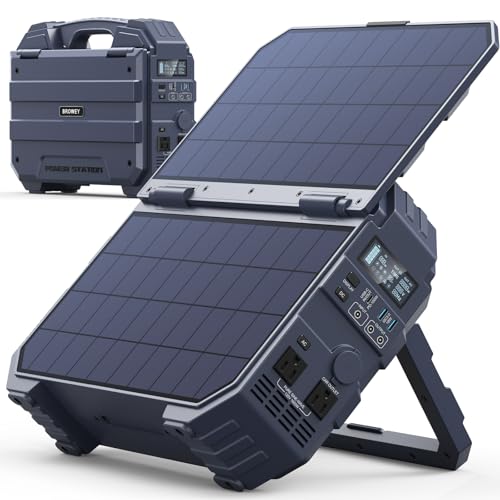
- 1,600W output and 1,024Wh capacity
- Built-in 40W solar panel with MPPT
- LiFePO4 battery rated for 3,000+ cycles
Best For: Emergency backup, camping, RV trips, and off-grid living
Fast-Charging Choice

- 1,500W AC output and 1,070Wh capacity
- Includes a 200W solar panel
- App-controlled charging with a one-hour emergency mode
Best For: Camping, road trips, and emergency power
Compact Camp Companion

- 300W output with a 230Wh LiFePO4 battery
- Weighs only 7.4 pounds
- 100W USB-C PD and seven total outlets
Best For: Small electronics, campsite lighting, and lightweight travel
High-Output Solar System

- 1,800W output and 1,024Wh capacity
- 220W bifacial solar panel included
- 45-minute AC charge to 80% and under-10ms UPS
Best For: Home backup, demanding appliances, and off-grid living
Lightweight Trail Power

- 292Wh capacity with 300W rated output
- About 7.5 pounds with an integrated handle
- Over 4,000 rated LiFePO4 charge cycles
Best For: Lightweight camping, hiking, travel, and smaller electronics
High-Capacity Camp Backup

- 999Wh capacity with 1,000W continuous output
- AC, DC, USB-C, USB-A, car, and wireless charging
- Solar and pass-through charging supported
Best For: Camping, RV trips, job sites, and home backup
Ready-to-Go Solar Kit
Jackery Explorer 300 Solar Bundle

- Includes a 292Wh, 300W Explorer 300
- Comes with a 40W Air Solar Panel
- Lightweight design with six-device charging
Best For: Camping, travel, RV outings, and compact solar charging
Balanced Off-Grid Pick

- 288.6Wh capacity and 330W output
- AC, car, and solar recharge options
- Lightweight with extensive device ports
Best For: Camping, road trips, CPAP use, and small emergency loads
Long-Life Battery Pick

- LiFePO4 battery rated for 3,500+ cycles
- 300W output with 600W surge capacity
- Six-device charging and MPPT solar input
Best For: Frequent camping, travel, and essential emergency electronics
Lightweight Budget Pick
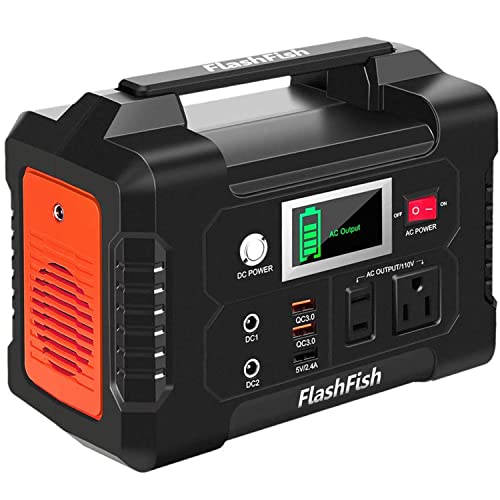
- 151Wh battery with 200W AC output
- Only about 4.1 pounds
- LCD display and three recharge methods
Best For: Short trips, light camping, personal electronics, and portable backup
Built-In Solar Pick – BROWEY S1600
The BROWEY S1600 is a capable option for off-grid portable power stations when you need substantial output and integrated solar charging. Its 1,024Wh battery, 1,600W pure sine wave output, built-in 40W solar panel, and multiple charging methods suit emergency backup, camping, RV trips, and off-grid living.
Best For: Campers and emergency-preparedness buyers who value built-in solar charging and enough output for refrigerators, CPAP machines, and power tools.
Pros:
- 1,600W output with 3,200W peak capacity
- Built-in 40W solar panel with MPPT controller
- Long-life LiFePO4 battery rated for 3,000+ cycles to 80% capacity
- Includes AC, car, USB-C PD, DC, and conversion accessories
Cons:
- The built-in panel is limited to 40W, so larger external panels may be preferable for faster solar charging
- At 12kg, it is less lightweight than smaller portable power stations
With strong appliance-running capability and a durable LiFePO4 battery, the S1600 is a practical all-in-one choice. Its integrated panel adds convenience, while external-panel compatibility provides more flexibility when sunlight is available.
Fast-Charging Choice – Jackery Explorer 1000 v2
The Jackery Explorer 1000 v2 is a compact choice among off-grid portable power stations, pairing a 1,070Wh capacity with 1,500W AC output and a supplied 200W solar panel. Its app-based controls, quiet charging mode, and lightweight 23.8-pound design make it convenient for camping, road trips, and emergency use.
Best For: Outdoor users who want a relatively lightweight system with app control, rapid AC charging, and included solar capability.
Pros:
- 1,500W AC output with 3,000W surge capacity
- Supplied 200W solar panel can recharge the unit to 80% in about six hours under stated conditions
- LFP battery rated to retain over 70% capacity after 4,000 cycles
- App includes emergency, quiet overnight, and energy-efficiency charging modes
Cons:
- One-hour full charging requires enabling emergency charging in the Jackery app
- The listed configuration has three AC outlets, which may limit larger setups
The Explorer 1000 v2 balances portability, useful capacity, and smart charging controls. It is especially appealing when fast wall charging and a manageable carry weight matter as much as solar readiness.
Compact Camp Companion – VTOMAN FlashSpeed 300
The VTOMAN FlashSpeed 300 is a lightweight entry in the off-grid portable power stations category, offering 300W of output and a 230Wh LiFePO4 battery in a 7.4-pound package. Its 100W USB-C PD input, seven outlets, and built-in emergency light make it suited to smaller electronics and campsite essentials.
Best For: Campers, travelers, and backup users powering phones, cameras, lights, drones, speakers, and other modest loads.
Pros:
- Compact 7.4-pound design with 230Wh capacity
- 100W USB-C PD input and output can recharge compatible devices quickly
- Seven outlets support simultaneous charging
- Built-in LED offers steady, strobe, and SOS modes
Cons:
- 300W output and 230Wh capacity are not intended for large appliances
- The supplied notes do not specify a solar panel included in the box
This model prioritizes portability and convenient device charging over high-wattage appliance support. It is a sensible fit for personal electronics and lighting where easy carrying is more important than extended runtime.
High-Output Solar System – EcoFlow DELTA 3 Classic
The EcoFlow DELTA 3 Classic is designed for buyers who need robust off-grid portable power stations performance, combining 1,800W output, a 1,024Wh battery, and a supplied 220W bifacial solar panel. Its fast AC charging, UPS functionality, and X-Boost support make it useful for home backup, outdoor use, and off-grid living.
Best For: Users seeking higher appliance capacity, rapid recharge times, and backup protection for sensitive electronics.
Pros:
- 1,800W output with 3,600W surge capacity
- X-Boost can support loads up to 2,600W according to the supplied notes
- 0–80% AC charging takes about 45 minutes
- 220W bifacial panel and under-10ms UPS switching add versatility
Cons:
- The power station and solar panel may arrive separately
- The supplied notes do not list the unit’s weight
The DELTA 3 Classic stands out when output and fast charging take priority. Its UPS feature broadens its role beyond camping, while the included bifacial panel supports renewable recharging for longer off-grid use.
Lightweight Trail Power – Jackery Explorer 300
For hikers, campers, and travelers who prioritize low carry weight, the Jackery Explorer 300 is a compact option among off-grid portable power stations. Its 292Wh capacity, 300W rated output, and six-device charging setup can handle common electronics such as laptops, cameras, and drones.
Best For: Lightweight camping, hiking, travel, CPAP use, and smaller off-grid electronics.
Pros:
- Weighs about 7.5 pounds and has an integrated carrying handle.
- Offers two AC outlets, USB-C, two USB-A ports, and a 120W car port.
- LiFePO4 battery chemistry is rated for more than 4,000 charge cycles before reaching 70% capacity.
- Can reach 80% charge in approximately 2.8 hours with a 100W solar panel.
Cons:
- The 300W output is intended for smaller electronics rather than high-demand appliances.
- The solar panel is optional with this power-station-only package.
The Explorer 300 is a practical pick when portability matters more than maximum capacity. It is especially useful for personal electronics and short trips where a compact, long-lasting battery is sufficient.
High-Capacity Camp Backup – EBL 1000W Power Station
The EBL 1000W Solar Generator is designed for shoppers who need more capacity and output from an off-grid power station. Its 999Wh battery and 1,000W continuous output support small appliances, tools, electronics, RV gear, and longer-duration backup needs.
Best For: Camping, RV trips, job sites, and home backup where higher capacity and multiple charging options are important.
Pros:
- Provides 999Wh of capacity and 1,000W continuous output.
- Includes AC, DC, car, USB-C, USB-A, and 10W wireless charging options.
- Supports solar charging and pass-through charging.
- Built-in BMS, automatic cooling fan, LCD display, SOS light, and folding handle add practical utility.
Cons:
- At about 17.86 pounds in the product description, it is less convenient for long hikes than smaller stations.
- AC charging takes approximately 7–8 hours, while car charging takes 9–11 hours.
- The product notes list a two-year manufacturer warranty.
Choose the EBL when runtime and output are more important than minimum weight. Its broad port selection and 999Wh capacity make it a versatile choice for campsites, RV storage, and emergency use.
Ready-to-Go Solar Kit – Jackery Explorer 300 Solar Bundle
The Jackery Explorer 300 bundle pairs a 292Wh, 300W power station with a 40W Air Solar Panel, making it a convenient entry point for off-grid portable power stations with solar charging included. The lightweight unit can power everyday electronics while the included panel helps maintain the battery away from outlets.
Best For: Camping, travel, RV outings, and buyers who want a compact solar-ready kit.
Pros:
- Includes the Explorer 300 power station and a 40W Air Solar Panel.
- Weighs about 7.5 pounds for the power station and uses an integrated handle.
- Provides two AC outlets, 100W USB-C, two USB-A ports, and a 120W car port.
- LiFePO4 battery chemistry is rated for more than 4,000 charge cycles before reaching 70% capacity.
Cons:
- The 300W running output limits it to smaller electronics and appliances.
- The included 40W panel charges more slowly than the optional 100W panel; the notes estimate 80% in about 7.5 hours.
This package is a strong fit for buyers who want a ready-made solar setup instead of sourcing a compatible panel separately. Its compact capacity works best for personal devices and shorter outdoor trips rather than powering large appliances.
Balanced Off-Grid Pick – GRECELL EB300
For shoppers comparing off-grid portable power stations, the GRECELL EB300 offers a useful balance of capacity, output, portability, and charging flexibility. Its 288.6Wh battery and 330W pure sine wave AC output suit camping, road trips, CPAP use, and basic emergency backup.
Best For: Campers and travelers who want a lightweight station with multiple charging methods and broad device compatibility.
Pros:
- 288.6Wh capacity with 330W output can run many small electronics and appliances under 330W.
- Includes AC, DC, USB-A, USB-C, cigarette-lighter, and wireless charging options.
- Supports wall, car, and 60–120W solar recharging.
- Lightweight 7.94-pound design includes an LED flashlight and a 24-month warranty.
Cons:
- Wall charging takes approximately 6–7 hours.
- Solar panels are not included.
- Not intended for appliances exceeding its 330W output rating.
The EB300 is a versatile choice when you need more capacity than a compact power bank but still want an easy-to-carry unit. Its range of ports and three recharge options make it especially practical for varied off-grid trips.
Long-Life Battery Pick – DaranEner NEOZ2
The DaranEner NEOZ2 stands out among off-grid portable power stations for its LiFePO4 battery and compact 300W pure sine wave output. It is designed for essential electronics, camping, travel, and emergency use rather than high-wattage appliances.
Best For: Buyers prioritizing battery longevity, a lightweight design, and simultaneous charging for several smaller devices.
Pros:
- LiFePO4 battery is rated for up to 3,500+ cycles.
- Provides 300W continuous output with 600W surge capacity.
- Can charge up to six devices through AC, USB, and 12V DC ports.
- Supports AC, car, and up to 60W solar input with built-in MPPT control.
Cons:
- Its 192Wh capacity is lower than some larger portable stations.
- Not suitable for high-power appliances such as hair dryers, rice cookers, or mini-fridges over its rating.
- Solar panels and car charging cables are not included.
Choose the NEOZ2 if long-term battery durability matters more than maximum capacity. At 5.73 pounds, it is particularly convenient for mobile setups, though its 300W limit requires careful appliance selection.
Lightweight Budget Pick – Flashfish E200
The Flashfish E200 is a compact option for shoppers seeking off-grid portable power stations for phones, cameras, lights, fans, and other modest loads. Its 151Wh battery and 200W AC output keep the unit light enough for backpacks, vehicles, and short camping trips.
Best For: Day trips, light camping, travel, and emergency charging where low weight and simple operation are priorities.
Pros:
- Weighs approximately 4.1 pounds and includes a soft carrying handle.
- Offers an AC outlet, two DC ports, and three USB ports.
- LCD display shows remaining power and charging or output status.
- Supports wall, car, and compatible 60W solar charging.
Cons:
- 151Wh capacity and 200W output limit the size of appliances it can run.
- Solar panel is sold separately.
- Its smaller battery is less suited to extended, high-demand backup.
The E200 makes sense when portability is more important than runtime. It is a straightforward power source for charging personal electronics and running small devices, but shoppers should stay within the 200W output limit.
How We Picked the Best Off-Grid Portable Power Stations
We evaluated these Off-Grid Portable Power Stations by comparing the specifications that matter outside the home: battery capacity, continuous and peak AC output, charging options, portability, battery chemistry, solar compatibility, and connection variety. We also considered whether each model fits a specific use case, such as emergency backup, camping, remote work, travel, or powering small appliances.
Capacity and wattage are not interchangeable. Watt-hours indicate how long a station may run a device, while watts determine whether it can operate that device in the first place. Real-world runtime is lower than the advertised capacity because of inverter and conversion losses.
Quick Comparison
| Best For | Recommended Type | What to Prioritize |
|---|---|---|
| Phones, lights, and small electronics | Compact 192–330Wh model | Low weight, USB-C, and easy charging |
| Camping and weekend trips | Approximately 300–500Wh model | Portability, solar input, and pure-sine AC output |
| Remote work or longer outages | 900–1,100Wh model | More capacity, fast recharge, and multiple ports |
| Higher-demand emergency backup | 1,000Wh-plus, high-output model | Continuous wattage, surge capacity, and expansion options |
Key Buying Factors for Off-Grid Portable Power Stations
Battery Capacity and Chemistry
Choose capacity based on the devices you expect to run and how long you need them powered. LiFePO4 batteries generally offer a longer cycle life and strong stability, while compact models may trade capacity for lower weight and easier transport.
Output and Appliance Compatibility
Check continuous AC output before buying. A station rated at 300W may handle chargers, lights, routers, and small electronics but not a high-wattage kettle or heater. Peak output helps with brief startup surges, but it does not replace a higher continuous rating.
Solar Charging and Recharge Speed
A bundled solar panel adds convenience, but charging time depends on panel wattage, sunlight, input limits, and battery level. Look for multiple charging methods if you will use the station at home as well as off-grid.
Ports, Safety, and Portability
USB-C Power Delivery is valuable for modern laptops and phones. Also check the number of AC and DC ports, display readability, built-in lighting, weight, handles, thermal protections, and warranty support.
Who Should Buy Which Off-Grid Portable Power Stations?
Choose a compact model such as the VTOMAN, DaranEner, GRECELL, Jackery Explorer 300, Jackery Solar Generator 300, or FF FlashFish when portability is the priority and you mainly need to charge personal electronics, lights, cameras, or small communication devices.
For longer camping trips, remote work, or essential home backup, the Jackery Solar Generator 1000 v2, EF ECOFLOW DELTA 3 Classic, or EBL 1000W model provides a more practical capacity range. These are better suited to multiple devices and extended use between charges.
Choose the BROWEY 1600W model when higher output and a built-in solar panel are more important than minimum weight. Before purchasing any option, list your appliances, add their wattage, estimate daily runtime, and select enough capacity for charging losses and unexpected demand.