Fine dust can linger long after a cutting or sanding session ends, making effective air cleaning an important part of a safer, more comfortable home workshop. The right filtration system can improve air circulation, capture airborne particles, and complement—not replace—source dust collection.
This roundup compares 10 workshop air filtration systems for home studios across compact rooms, larger woodworking areas, and demanding shop environments. Consider airflow, filtration stages, noise, controls, installation, and replacement-filter costs before choosing.
Best 10 Workshop Air Filtration Systems for Home Studios Picks for 2026
Best Budget Pick
WEN 3410 Air Filtration System
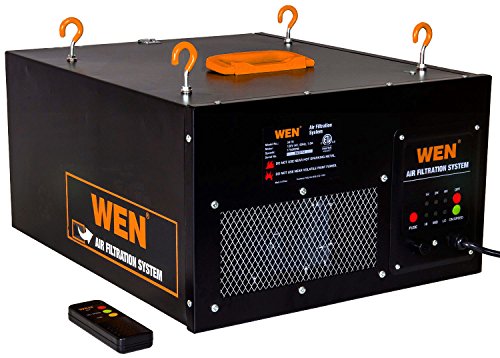
- 300–400 CFM airflow
- Remote control and timer
- For rooms up to 400 sq. ft.
Best For: Compact home studios needing convenient routine filtration
Best Heavy-Duty Filtration
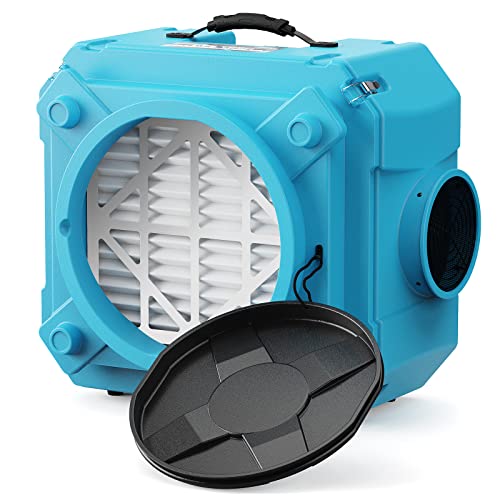
- Three-stage MERV-10, carbon, and HEPA filtration
- 550 CFM airflow
- Stackable and daisy-chain capable
Best For: Large studios and dust-, smoke-, or odor-heavy projects
Best Ceiling-Mounted Option
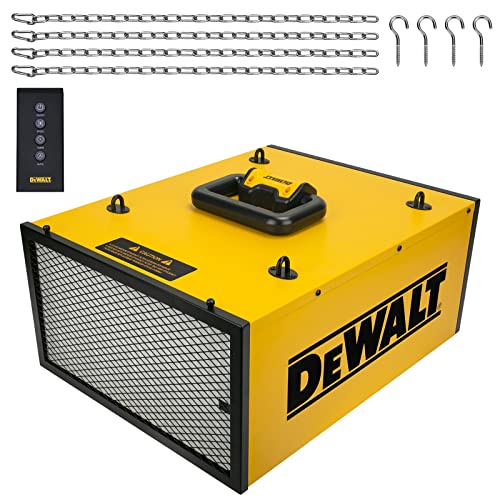
- Hangs from the ceiling
- H11 HEPA and washable pre-filter
- Four modes with remote timer
Best For: Woodworking studios where floor space is limited
Best Portable Air Scrubber

- MERV-10, carbon, and H13 HEPA filtration
- 550 CFM airflow
- Foldable handle and stackable design
Best For: Repair, painting, and high-dust studio projects requiring mobility
High-Capacity Pick

- 1,050–1,350 CFM airflow
- Flexible ceiling or workbench installation
- Includes four replaceable MERV-11 filters
Best For: Large woodworking studios and garages
Compact Room Pick
RIKON 62-450 Air Filtration System

- 250–450 CFM across three speeds
- Certified HEPA filtration
- Steel cabinet with carry handle
Best For: Home studios up to 400 square feet
Smart-Speed Pick

- Automatic sensor with six speeds
- Two-stage 5-micron and 1-micron filtration
- Remote timer and filter-status indicator
Best For: Studios wanting automated air-quality control
Best Compact Airflow

- Up to 780 CFM with 270° air intake
- Replaceable MERV 11 filter and ionizer
- Remote control, timer, and flexible mounting
Best For: Home studios and workshops up to 800 square feet
Best High-Capacity Filtration

- 1700 CFM capacity for large spaces
- MERV 8 and MERV 12 two-filter system
- Remote timer and overload-protected motor
Best For: Large or demanding woodworking studios
Best Value Filter Bundle

- Three speeds from 300 to 400 CFM
- 1-micron inner and 5-micron outer filters
- Includes spare filters and remote timer
Best For: Smaller studios seeking easy maintenance
Best Budget Pick – WEN 3410 Air Filtration System
The WEN 3410 is a practical choice for workshop air filtration systems for home studios, especially when you want straightforward controls and modest room coverage. Its three-speed airflow, replaceable filters, timer, and RF remote make it easy to run while you work or after leaving the room.
Best For: Home studios and workshops up to 400 square feet that need convenient overhead air cleaning.
Pros:
- Three airflow settings from 300 to 400 CFM.
- Includes a 1-micron filter and a replaceable 5-micron pre-filter.
- RF remote works from up to 26 feet and does not require direct line of sight.
- Programmable timer can shut the unit off automatically.
Cons:
- Coverage is limited to rooms up to 400 square feet.
- Noise is rated from 50 to 60 dB.
- It lacks the multi-stage HEPA and carbon filtration listed for some air scrubbers.
The WEN 3410 favors convenience and accessible operation over heavy-duty remediation features. It is a sensible fit for routine dust control in a compact home studio.
Best Heavy-Duty Filtration – ALORAIR CleanShield HEPA 550
The ALORAIR CleanShield HEPA 550 is built for demanding workshop air filtration systems for home studios and repair spaces. Its three-stage setup combines MERV-10, activated carbon, and HEPA filtration, while the durable shell, stackable design, and high airflow support larger or messier projects.
Best For: Larger studios, renovation work, and situations involving dust, smoke, odors, or restoration debris.
Pros:
- Three-stage filtration includes MERV-10, carbon, and HEPA filters.
- HEPA filter is rated to trap 99.97% of particles larger than 0.3 microns.
- Adjustable airflow reaches 550 CFM and supports filtration areas up to 5,500 cubic feet.
- Can be stacked and daisy-chained with up to three units.
Cons:
- At 39.6 pounds, it is heavier than compact workshop units.
- Its 65 dB noise rating may be noticeable in a quiet studio.
- Optional ducting is not included.
This ALORAIR model is more machine than simple dust filter, but that extra capacity is useful for substantial studio work. Choose it when multi-stage filtration and stackable 550-CFM performance matter more than quiet operation.
Best Ceiling-Mounted Option – DEWALT DWXAF101
The DEWALT DWXAF101 is a space-saving option among workshop air filtration systems for home studios. Designed to hang from the ceiling, it combines a washable pre-filter, H11 HEPA filter, remote control, automatic sensing, and selectable timer settings for convenient background dust collection.
Best For: Woodworking shops and home studios where preserving floor space and controlling airborne dust are priorities.
Pros:
- Ceiling-hanging design keeps the floor clear.
- Two-stage filtration uses a washable cotton pre-filter and H11 HEPA filter.
- Offers HI, MID, LO, and AUTO operating modes.
- Remote control, filter indicator, and 1-, 2-, 4-, and 8-hour timers simplify operation.
Cons:
- The supplied notes do not specify a CFM airflow or room-coverage rating.
- Its 64 dB noise rating may be audible during recording or other quiet work.
- Ceiling installation requires space and secure mounting with the included hooks and chains.
The DWXAF101 is a strong fit when a suspended unit makes more sense than a floor-standing scrubber. Its automatic mode and timer are particularly useful for clearing residual workshop dust after a project.
Best Portable Air Scrubber – VEVOR 550 CFM Air Scrubber
The VEVOR 550 CFM Air Scrubber brings restoration-style performance to workshop air filtration systems for home studios. Its MERV-10 pre-filter, carbon filter, and H13 HEPA filter target dust, pollen, smoke, and odors, while the foldable handle and stackable design make it easier to move between work areas.
Best For: Home repair, painting, construction, and studio projects that produce substantial dust, smoke, or odors.
Pros:
- Three-stage filtration includes MERV-10, carbon, and H13 HEPA media.
- Adjustable airflow reaches 550 CFM and covers a stated 5,500-cubic-foot filtration area.
- Captures 99.97% of particles as small as 0.3 microns, according to the supplied specifications.
- Foldable handle, stackable body, auxiliary sockets, and filter-change indicator add practicality.
Cons:
- Its 68 dB noise rating may be too loud for recording or quiet creative work.
- The relatively large body may be cumbersome in a compact studio.
- Controls are manual rather than remote-operated.
With strong airflow and broad contaminant coverage, the VEVOR is suited to cleanup and active project work rather than silent background use. Its portability makes it useful when one filtration unit must serve multiple rooms.
High-Capacity Pick – Abestorm DecDust 1350IG
For larger home studios, the Abestorm DecDust 1350IG is a high-capacity option among workshop air filtration systems for home studios. Its 1,050–1,350 CFM airflow is designed for spaces up to 1,700 square feet, while the MERV-11 filters and built-in ionizer target dust, sawdust, and odors.
Best For: Large woodworking studios, garages, and workshops needing flexible placement and strong airflow.
Pros:
- High 1,050–1,350 CFM airflow for rooms up to 1,700 square feet.
- Can be ceiling-hung, ceiling-mounted, or placed on a workbench.
- Includes touch controls, remote operation, mounting hardware, and four replaceable MERV-11 filters.
Cons:
- Noise is rated at approximately 60–69 dBA.
- Filters may need replacement every two to four months.
- Does not meet California air cleaner regulations and cannot be shipped to California.
The Abestorm stands out when airflow and installation flexibility matter most. Its larger coverage is useful for spacious studios, but buyers should account for filter costs, noise, and regional shipping restrictions.
Compact Room Pick – RIKON 62-450 Air Filtration System
The RIKON 62-450 is a compact choice for workshop air filtration systems for home studios, with three airflow settings from 250 to 450 CFM. Its steel cabinet, remote control, and replaceable inner and outer filters make it suited to smaller rooms up to 400 square feet.
Best For: Smaller home workshops and studios where a sturdy, movable filtration unit is useful.
Pros:
- Three speed settings provide 250, 350, or 450 CFM airflow.
- Certified HEPA filtration is listed with 1-micron particle retention.
- Steel cabinet, carry handle, remote control, and quick-release filter latches support practical shop use.
Cons:
- Coverage is limited to rooms up to 400 square feet.
- The supplied notes do not specify a noise rating.
- Its maximum airflow is lower than the other systems in this roundup.
The RIKON is a sensible fit for a compact studio rather than a large open workshop. Its durable construction and convenient filter access are appealing if portability and certified HEPA filtration are higher priorities than maximum airflow.
Smart-Speed Pick – JET AFS-1000C
The JET AFS-1000C adds automatic adjustment to the category of workshop air filtration systems for home studios. Its air quality sensor controls six speeds, while the two-stage filtration captures 99% of 5-micron particles and 85% of 1-micron particles.
Best For: Woodworkers who want sensor-based speed control, remote operation, and a programmable timer.
Pros:
- Automatic air quality sensor adjusts among six speeds.
- Outer and inner filters target 5-micron and 1-micron particles, respectively.
- Remote control includes speed adjustment and a 16-hour timer.
- LED display, filter-status indicator, and five-year warranty are useful additions.
Cons:
- Noise reaches 67 dB at the highest speed.
- The unit weighs 33 pounds and is larger than the compact RIKON.
- The supplied notes do not state a room-size coverage rating.
The JET is the most automation-focused option here. It is a strong choice for users who prefer the system to respond to changing air quality, though its size, weight, and top-speed noise deserve consideration before ceiling mounting.
Best Compact Airflow – Abestorm DecDust 780IG
For home studios and smaller woodworking spaces, the Abestorm DecDust 780IG is a practical option among workshop air filtration systems for home studios. It combines up to 780 CFM airflow, a two-speed vortex fan, and a replaceable MERV 11 filter in a compact unit rated for workshops up to 800 square feet.
Best For: Home woodshops, garages, and studios needing strong airflow, flexible placement, and convenient remote operation.
Pros:
- Up to 780 CFM airflow with a 270-degree, three-sided intake.
- MERV 11 filtration is designed to capture fine airborne wood dust.
- Includes an ionizer, remote control, and a 1–9 hour timer.
- Can be ceiling-suspended or placed on a workbench.
Cons:
- Only two fan-speed settings are available.
- The filter requires periodic replacement to maintain performance.
- The ionizer may not suit users who prefer filtration without ionization.
Its compact design, relatively low listed noise level, and flexible installation make the Abestorm well suited to a home studio. The combination of high airflow and remote timer controls is especially useful when you want to clear residual dust after a project.
Best High-Capacity Filtration – JET IAFS-1700
JET Industrial Air Filtration System, 1700 CFM, 1/3 HP, 115V 1Ph (Model IAFS-1700)
Check Price On AmazonThe JET IAFS-1700 is a heavy-duty choice among workshop air filtration systems for home studios when airflow capacity is the priority. Its two-filter setup, three speed modes, enclosed motor, and 1–9 hour remote timer are suited to demanding woodworking environments.
Best For: Larger workshops or serious home studios that need high-capacity air circulation and robust construction.
Pros:
- 1700 CFM system capacity for substantial air movement.
- Two-stage filtration uses a washable MERV 8 outer filter and MERV 12 inner filter.
- Three airflow speed modes provide operating flexibility.
- Enclosed ball-bearing motor includes overload protection.
Cons:
- At 136 pounds, it is substantially heavier than compact alternatives.
- The listed 72 dB noise level may be noticeable in a home studio.
- Its larger dimensions require careful mounting and placement.
The JET is built more like an industrial shop unit than a lightweight studio purifier. Choose it when filtration capacity and motor durability outweigh concerns about weight, footprint, and operating noise; an optional charcoal filter slot also provides a path for odor reduction.
Best Value Filter Bundle – POWERTEC AF4001C
The POWERTEC AF4001C offers a straightforward, budget-conscious approach to workshop air filtration systems for home studios. It provides three fan speeds, remote control, and a bundled replacement-filter set, making it convenient for routine dust management in woodworking areas and garages.
Best For: Smaller workshops and home studios that want simple controls plus spare inner and outer filters.
Pros:
- Three airflow settings deliver 300, 350, or 400 CFM.
- Two-stage filtration uses a 5-micron outer filter and 1-micron inner filter.
- RF remote includes power, speed, and 1-, 2-, and 4-hour timer controls.
- Includes mounting hardware and extra replacement filters.
Cons:
- Maximum airflow is lower than the Abestorm and JET systems.
- Filter compatibility should be checked against the system’s dimensions.
- It is primarily designed for hanging installation.
For buyers who value ongoing maintenance convenience, the included extra filters are a meaningful advantage. The POWERTEC is best suited to modestly sized spaces where 400 CFM is adequate and simple remote-controlled operation matters more than maximum airflow.
How We Picked the Best Workshop Air Filtration Systems for Home Studios
We evaluated these Workshop Air Filtration Systems for Home Studios by comparing their advertised airflow, filtration approach, control options, installation style, and suitability for different room sizes. The selection includes compact 300–400 CFM units, midrange air scrubbers, and high-output systems reaching 1,000 CFM or more.
Air filtration is most effective when paired with a tool-mounted dust collector, proper ventilation, and good housekeeping. Specifications such as CFM and filter ratings are useful comparison points, but actual performance depends on filter loading, room layout, ducting, and operating speed.
Quick Comparison
| Best For | Look For | Relevant Options |
|---|---|---|
| Small studios | 300–450 CFM, compact hanging design, remote control | WEN, RIKON, POWERTEC |
| Fine-particle cleanup | HEPA or multi-stage filtration, sealed airflow path | ALORAIR, VEVOR |
| Medium woodworking rooms | 550–1,000 CFM and accessible replacement filters | DEWALT, Abestorm, JET AFS-1000C |
| Large or busy shops | High CFM, durable construction, extended-duty operation | JET IAFS-1700 |
Key Buying Factors for Workshop Air Filtration Systems for Home Studios
Airflow and Room Size
Higher CFM can circulate a larger room more quickly, but maximum airflow is not the only consideration. Choose a unit that can provide useful circulation at a tolerable noise level, and position it so clean air moves across the room rather than short-circuiting directly back into the intake.
Filter Design
Check whether the system uses a prefilter, inner filter, HEPA filter, or other staged arrangement. Prefilters help protect finer filters from rapid loading. Confirm the stated particle rating and make sure replacement filters are readily available before committing to a model.
Controls, Noise, and Installation
Remote controls, timers, and multiple fan speeds make it easier to run filtration during and after work. Compare the unit’s weight, hanging hardware, footprint, and electrical requirements with your studio. A quieter low setting may encourage longer use, which can matter more than peak airflow.
Operating Costs
Include replacement filters, energy use, and maintenance in the total cost. Inspect filters regularly, replace them when loaded, and avoid operating a filtration system with restricted airflow. Ionizers may be included on some models, but buyers who are sensitive to ozone should review the manufacturer’s specifications and use guidance.
Who Should Buy Which Workshop Air Filtration Systems for Home Studios?
Choose a compact 300–450 CFM model for a small hobby studio, occasional woodworking, or a room where simple hanging installation and remote control are priorities. WEN, RIKON, and POWERTEC fit this use case.
Choose a staged or HEPA-style air scrubber when fine-particle capture and flexible placement are more important than a basic overhead filter. ALORAIR and VEVOR are worth considering for cleanup-focused setups.
Choose a 550–1,000 CFM system for a medium-size woodworking room with frequent sanding, routing, or cutting. DEWALT, Abestorm, and JET’s 1,000 CFM model offer stronger circulation for larger spaces.
Choose a 1,700 CFM industrial unit only when the room, electrical supply, mounting plan, and workload justify its greater size and output. Regardless of model, use local dust extraction at the tool first and run the air cleaner long enough to remove suspended dust after work ends.