If you want crisp miniature detail for tabletop figures, display models, or resin prints, the right scanner can save hours of manual cleanup.
This roundup focuses on accuracy, surface detail, color capture, and scanning workflow so you can choose a high precision 3D scanner for miniatures with confidence.
Best 10 High Precision 3D Scanner for Miniatures Picks for 2026
Industrial Precision
Revopoint MetroY Ultra 3D Scanner

- Up to 0.01 mm single-frame precision
- Five scanning modes for different object types
- Scans black, shiny, and metallic surfaces without spray
Best For: Miniatures, reverse engineering, and industrial inspection
Clean Workflow
THREE 3D Scanner with Autofocus

- 0.033 mm accuracy for detailed scans
- Dual 13MP autofocus cameras for sharp focus
- No tracking dots needed and broad OS support
Best For: Miniatures and precision scanning with simple setup
Speed and Detail
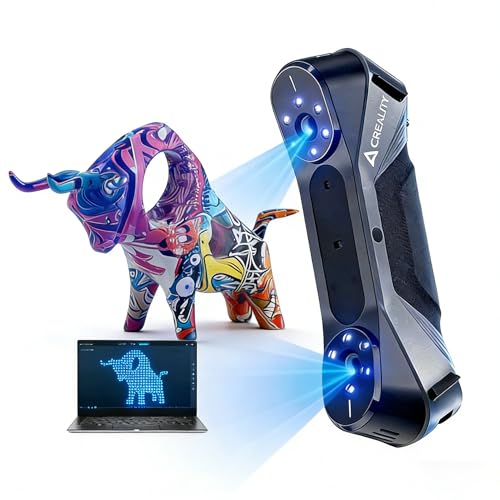
- 0.02 mm accuracy with 60 fps scanning
- Blue laser and infrared dual-mode system
- Scans black and metal objects with 24-bit color
Best For: Fast miniature scanning with color and surface flexibility
Smart Detail Capture
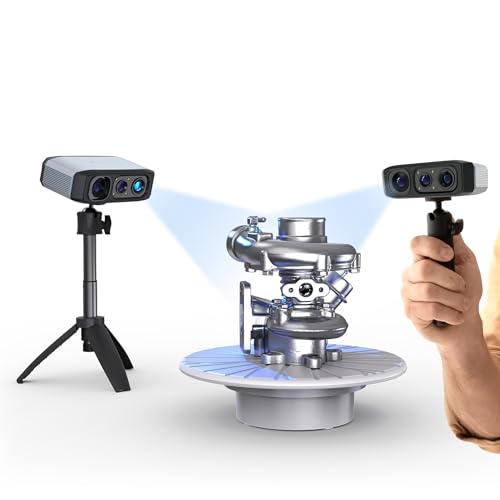
- Up to 0.03 mm accuracy with 0.07 mm resolution
- AI tracking and anti-shake features simplify use
- JMStudio handles scanning, editing, and optimization
Best For: Miniatures and 3D printing with beginner-friendly software
Editor’s Pick
Sermoon S1 Wireless High-Detail Scanner

- 0.02mm detail accuracy in blue laser mode
- Up to 4.6M measurements/s with 90fps
- Five modes plus color texture mapping
Best For: Buyers who want top detail and wireless scanning flexibility
Best Value
Moose Lite Compact Miniature Scanner
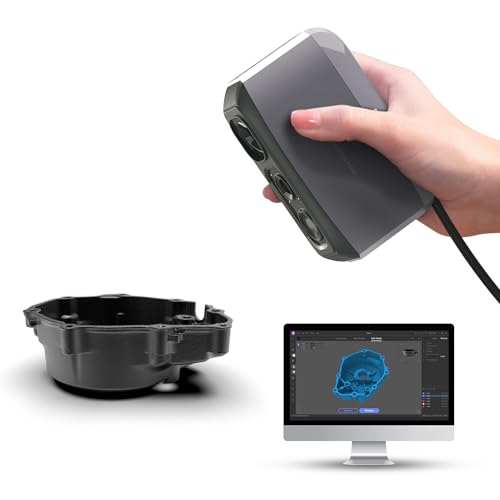
- 0.05mm accuracy with 0.1mm resolution
- AI tracking and marker-free scanning workflow
- 250g lightweight body with dark-scene support
Best For: Hobbyists wanting a lightweight, detail-focused scanner
Premium Performance
Raptor Pro Fast Detail Scanner

- 0.02mm accuracy in laboratory conditions
- 60fps with 660,000 points per second
- 22+7 blue laser lines and marker-based alignment
Best For: Buyers who want fast, high-detail scanning for small and large objects
Steady Entry-Level Pick
Creality CR-Ferret SE 3D Scanner
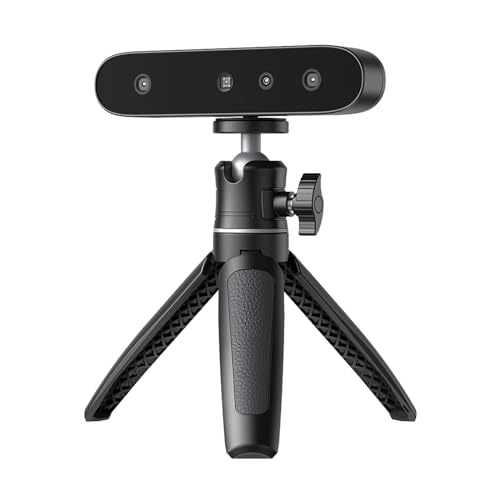
- 0.1 mm precision with anti-shake tracking
- 24-bit full-color scanning with 2MP camera
- Scans black and metallic objects without spray
Best For: Beginners wanting stable desktop scans with color capture
Most Versatile Kit
Creality Otter Lite Basic 3D Scanner

- 0.05 mm resolution for fine-detail scans
- Dual close-range and long-range scanning modes
- Includes turntable, markers, and carrying case
Best For: Users needing maximum precision and a full portable kit
Compact Color Scanner
Creality CR-Ferret SE Desktop Scanner

- 0.1 mm precision with anti-shake support
- 24-bit full-color capture via 2MP camera
- Lightweight 105 g design for easy portability
Best For: Desktop scanning with color output and simple operation
Industrial Precision – Revopoint MetroY Ultra 3D Scanner
If you need a high precision 3D scanner for miniatures and other small parts, the Revopoint MetroY Ultra is built around accuracy and speed. Its blue laser and structured-light modes make it flexible for detailed captures, while the 0.01 mm single-frame precision helps preserve fine geometry on small subjects.
Best For: Detailed miniature scanning, industrial inspection, and reverse engineering where tight tolerances matter.
Pros:
- Up to 0.01 mm single-frame precision for fine detail capture.
- Five scanning modes, including laser lines, structured light, and turntable scanning.
- No-spray scanning for black, shiny, or metallic surfaces.
- Wi-Fi 6 support and a 5500 mAh battery grip for more flexible use.
Cons:
- Requires relatively powerful computer hardware for best performance.
- Heavier industrial focus may be more than casual hobby users need.
- Outdoor and wireless features add convenience, but also complexity.
The MetroY Ultra stands out when precision is the priority and you want multiple scan modes in one system. For miniatures, its accuracy and detail-oriented workflow make it a strong fit if you are willing to support it with the right computer.
Clean Workflow – THREE 3D Scanner with Autofocus
The THREE 3D scanner is a practical high precision 3D scanner for miniatures if you want strong detail without the hassle of tracking dots. Its dual 13MP autofocus cameras and 0.033 mm accuracy are aimed at clean, consistent scans across a wide size range.
Best For: Users who want precise miniature scans with minimal setup and broad computer compatibility.
Pros:
- 0.033 mm accuracy for professional-grade detail.
- Dual 13MP autofocus cameras help keep tiny subjects sharp.
- No tracking dots required, which simplifies the workflow.
- Works with Windows, Mac, Linux, iOS, Android, and Chromebooks.
Cons:
- At 9.46 pounds, it is not the lightest option for portable use.
- Smaller users may not need the full scan range from miniature to engine block scale.
- Built-in software may be less customizable than advanced desktop-first ecosystems.
For buyers who value convenience as much as detail, THREE offers a straightforward path to scanning miniatures without extra surface prep. Its broad compatibility also makes it appealing if you use multiple devices or operating systems.
Speed and Detail – Creality Raptor 3D Scanner
For shoppers looking for a high precision 3D scanner for miniatures that also scans quickly, the Creality Raptor combines 0.02 mm accuracy with 60 fps performance. Its blue laser and infrared dual-mode system gives you options for small detailed objects, plus textured scans when color matters.
Best For: Fast miniature scanning, black or metallic objects, and users who want color capture too.
Pros:
- Up to 0.02 mm accuracy for metrological-style detail.
- 60 fps scanning with anti-shake support for smoother capture.
- Can scan black and metal objects with low reliance on powder.
- Includes 24-bit full color and outdoor scanning support up to 30,000 lux.
Cons:
- Best performance depends on meeting the recommended computer specs.
- Some users may not need both laser and infrared modes for simple miniature work.
- Outdoor color scanning is supported, but not as brightly as fully indoor-controlled setups.
The Raptor is a strong all-around pick if you want detail, speed, and color in one scanner. It is especially appealing for miniatures with dark surfaces or when you need a faster workflow without giving up fine accuracy.
Smart Detail Capture – 3DMakerpro Moose Lite Scanner
The 3DMakerpro Moose Lite is aimed at buyers who want a high precision 3D scanner for miniatures with smarter software support built in. Its blue light system, AI tracking, and anti-shake features are designed to make detailed scanning easier for hobby and print-focused users.
Best For: Miniature scanning, 3D printing prep, and beginner-friendly workflows with useful software tools.
Pros:
- Up to 0.03 mm accuracy and 0.07 mm resolution for fine detail.
- AI tracking and point cloud algorithms help simplify scanning.
- Anti-shake modules and rescan support make it easier to recover interrupted scans.
- 24-bit color camera and JMStudio software support scanning, editing, and optimization.
Cons:
- Some accessories, such as the Smart Grip, are optional rather than included.
- Accuracy is strong, but not as tight as the highest-end models in this list.
- Works best within the supported desktop operating systems and software workflow.
Moose Lite is a sensible choice if you want detail capture plus an easier scanning process. It is especially useful for miniatures that will be printed or displayed, where workflow simplicity matters almost as much as raw accuracy.
Editor’s Pick – Sermoon S1 Wireless High-Detail Scanner
If you want a high precision 3D scanner for miniatures, the Creality Sermoon S1 stands out for its 0.02mm detail accuracy and flexible multi-mode scanning. The blue laser and structured light options make it easier to adapt to tiny parts, while the Scan Bridge adds wireless convenience for a cleaner workflow.
Best For: Users who want maximum detail accuracy, wireless scanning convenience, and a scanner that can also handle larger objects.
Pros:
- 0.02mm maximum detail accuracy with blue laser mode
- Up to 4.6M measurements per second and 90fps scanning speed
- Five working modes for small parts through large objects
- RGB fill lights support realistic color texture mapping
Cons:
- More scanner than some miniature-only buyers may need
- Wireless scanning depends on the included Scan Bridge
- Larger and heavier than compact hobby-focused handheld units
Overall, the Sermoon S1 is the most feature-rich option here if you care about tiny surface detail and flexibility. It is especially appealing when miniatures are only part of a broader scanning workflow that may include other small or medium objects.
Best Value – Moose Lite Compact Miniature Scanner
The 3DMakerpro Moose Lite is a practical high precision 3D scanner for miniatures if you want detailed results without jumping to a larger pro system. Its 0.05mm accuracy, AI tracking, and marker-free structured light workflow are geared toward easier scanning of small printed parts and display models.
Best For: Hobbyists and makers who want a lightweight, affordable scanner for 3D printing and detailed small-object captures.
Pros:
- 0.05mm accuracy and 0.1mm resolution for detailed models
- AI tracking and point cloud processing help simplify scanning
- Lightweight 250g body makes it easy to move and use
- Supports dark-scene scanning with 9-level light adjustment
Cons:
- 10FPS scanning speed is slower than faster premium options
- Plastic build is less premium than the larger Moose model
- Smart Grip for mobile scanning is sold separately
Moose Lite is a sensible pick if your priority is usable detail rather than the highest-end speed or feature set. It keeps the workflow approachable with JMStudio software and broad Windows/Mac compatibility, which is helpful for first-time scanner buyers.
Premium Performance – Raptor Pro Fast Detail Scanner
If speed matters as much as detail, the Creality Raptor Pro is a strong high precision 3D scanner for miniatures and other small objects. It combines 0.02mm laboratory accuracy with 60fps scanning and 22+7 blue laser lines, making it a good fit when you need both fine capture and efficient throughput.
Best For: Users who want fast, high-detail scanning with wireless convenience and broad object-size support.
Pros:
- 0.02mm accuracy in laboratory conditions
- 60fps scanning and 660,000 points per second
- 22+7 blue laser lines for detailed capture
- Marker-based alignment supports smoother stitching
Cons:
- Heavier, larger scanner may be less convenient for casual desk use
- Accuracy is stated in laboratory conditions
- May be more capability than needed for very simple miniature scanning
The Raptor Pro is the best fit when you want premium performance without giving up fine detail. Its wide size range also makes it useful beyond miniatures, so it suits buyers who expect to scan both small parts and much larger objects.
Steady Entry-Level Pick – Creality CR-Ferret SE 3D Scanner
If you want a high precision 3D scanner for miniatures that also stays approachable, the Creality CR-Ferret SE focuses on stable capture, simple operation, and color output. Its anti-shake tracking helps reduce errors from hand movement, while the 0.1 mm accuracy and 24-bit color camera make it a practical fit for detailed scans on compatible desktop setups.
Best For: Beginners and desktop users who want stable, color 3D scans without a complex setup.
Pros:
- Anti-shake scanning helps maintain accuracy even if your hands are unsteady.
- 0.1 mm precision is suitable for detailed desktop scanning workflows.
- 24-bit full-color capture adds lifelike color detail to models.
- Can scan black or metallic objects without spray.
Cons:
- PC scanning only, so it is not as flexible as Android-friendly options.
- Does not include a battery handle.
- Best suited to desktop use rather than fully mobile scanning.
Overall, the CR-Ferret SE is a solid choice if your priority is consistent results over advanced portability. It is especially appealing for buyers who want a straightforward scanner that can handle dark or reflective objects while still keeping the workflow simple.
Most Versatile Kit – Creality Otter Lite Basic 3D Scanner
For buyers looking for a high precision 3D scanner for miniatures with more scanning flexibility, the Creality Otter Lite Basic stands out with its 0.05 mm resolution and dual-range capture modes. It is built for close objects as small as 20 mm cubed, but it also covers longer-range scanning, making it a strong all-around choice for detailed model capture, printing, and reverse engineering.
Best For: Users who want a precise, portable scanner with a complete accessory kit and color texture support.
Pros:
- 0.05 mm resolution offers very fine detail capture.
- Dual scanning ranges support both small objects and longer-distance work.
- RGB and infrared cameras capture full-color textures at up to 30 fps.
- Includes a turntable, calibration board, markers, and carrying case.
Cons:
- Weighs 235 g, so it is less ultralight than the Ferret SE.
- More accessories may add setup complexity for first-time users.
- Its feature set may be more than casual users need.
In practice, the Otter Lite Basic is the most capable option here if you want higher precision and a more complete kit. It makes sense for users who plan to scan small, detailed objects and want output ready for 3D printing or reverse engineering.
Compact Color Scanner – Creality CR-Ferret SE Desktop Scanner
If you need a high precision 3D scanner for miniatures that emphasizes easy handling and color capture, this CR-Ferret SE version is a straightforward desktop option. It combines 0.1 mm precision with anti-shake technology, so it is designed to keep scans stable while still capturing full-color models from a lightweight 105 g body.
Best For: Desktop users who want a lightweight, beginner-friendly scanner with color output.
Pros:
- 0.1 mm precision supports detailed modeling work.
- Anti-shake technology helps reduce errors from hand tremor.
- 24-bit full-color capture with a built-in 2MP camera.
- Lightweight 105 g design makes it easy to carry.
Cons:
- Limited to PC scanning.
- Less flexible than versions that support mobile workflows.
- Does not include a battery handle.
This version is a good fit if you want the CR-Ferret SE formula in a compact, easy-to-move package. It is most compelling for desktop scanning sessions where color, stability, and simple setup matter more than full wireless flexibility.
How We Picked the Best High Precision 3D Scanner for Miniatures
We focused on specs and features that matter most for small objects: stated accuracy, detail capture, stability, color support, scanning modes, and how easy the workflow is for beginners and experienced users. A strong High Precision 3D Scanner for Miniatures should preserve fine edges, textures, and shallow features without constant re-scans.
We also prioritized models with practical quality-of-life features such as anti-shake tools, wireless or guided scanning, and software support that helps clean up small-object data.
Quick Comparison
For the finest miniature detail, laser and structured-light scanners with 0.01 mm to 0.02 mm claims are the top tier. If you want a simpler path with solid all-around results, 0.05 mm models can still work well for larger miniatures and gaming pieces. Desktop-style options are often easier for repeatable scanning, while handheld units offer more flexibility for oddly shaped subjects.
Key Buying Factors for a High Precision 3D Scanner for Miniatures
Accuracy and Real Detail
Look beyond marketing terms and check the stated precision, repeatability, and minimum scan size. Miniatures have sharp edges, small weapons, thin parts, and subtle sculpting, so accuracy matters more than raw speed.
Light Source and Surface Handling
Blue laser systems can be excellent for fine geometry, while structured light often balances detail and usability. If you scan glossy resin, dark plastic, or painted minis, choose a model with stronger surface handling or prepared scanning workflows.
Color Capture
Full-color scanning is useful if you want reference models, texture preservation, or digital display assets. If your goal is 3D printing only, color matters less than geometry fidelity.
Speed, Stability, and Software
A fast scanner is helpful, but only if tracking stays locked on small subjects. Anti-shake features, autofocus, and smart alignment tools can reduce frustration and improve results on tiny models.
Who Should Buy Which High Precision 3D Scanner for Miniatures?
If you want the highest possible miniature fidelity, choose a model with laser-based scanning and very tight accuracy claims. If you need a versatile tool for both minis and larger objects, a hybrid scanner with multiple modes is usually the best fit. If you are new to scanning, prioritize software simplicity, stable tracking, and fewer setup steps over extreme specifications.
For hobbyists, creators, and small studios, the best High Precision 3D Scanner for Miniatures is the one that matches your workflow: detailed enough for tiny parts, easy enough to use often, and reliable enough to deliver consistent results.