The best portable power stations make it easier to keep phones, lights, appliances, and essential electronics running when you are away from an outlet or facing a power outage.
We compared 10 current models across battery capacity, output, recharge speed, portability, battery chemistry, and overall use case to help you choose the right fit.
Best 10 Portable Power Stations Picks for 2026
Best Compact Power Station

- 1,070Wh capacity and 1,500W output
- 23.8-pound design with foldable handle
- LFP battery rated for 4,000 cycles
Best For: Camping, road trips, and emergency backup
Best Fast-Charging Backup

- 1,152Wh LiFePO4 battery
- 1,800W output with 2,700W boost mode
- 20ms UPS switching for essentials
Best For: Home backup and fast-charging outdoor power
Best High-Capacity Option

- 2,042Wh capacity and 2,200W output
- 39.5 pounds and compact for a 2kWh unit
- 20ms UPS switching and quiet charging
Best For: Extended home backup and demanding outdoor use
Best Expandable Power Station

- 1,024Wh capacity with 1,800W output
- Expandable up to 5kWh
- Full charge in about 56 minutes
Best For: Scalable home backup and versatile outdoor power
Best Lightweight Pick

- 7.5-pound design with 292Wh capacity
- 300W output with six-device charging
- LiFePO4 battery and solar charging support
Best For: Lightweight camping, travel, and small electronics
Best for Everyday Use

- 1,024Wh capacity and 1,800W output
- 80% charge in roughly 45 minutes by AC
- 10ms UPS and quiet 30dB silent mode
Best For: Home backup, emergencies, and fast-recharging needs
Best Long-Runtime Option
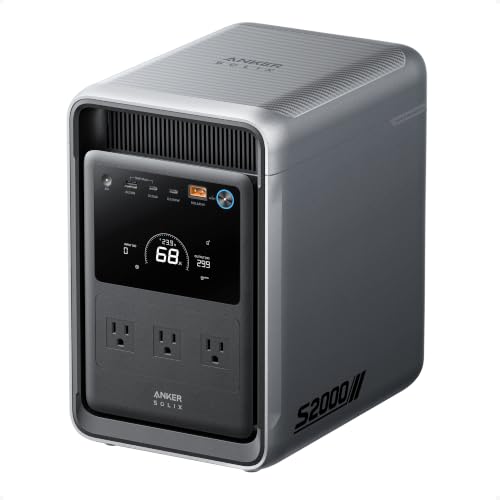
- 2,010Wh battery with 1,500W output
- Up to 35 hours of stated refrigerator runtime
- 10,000-cycle LFP battery and 400W solar input
Best For: Extended home backup, outages, and larger appliances
Best with Extra Features
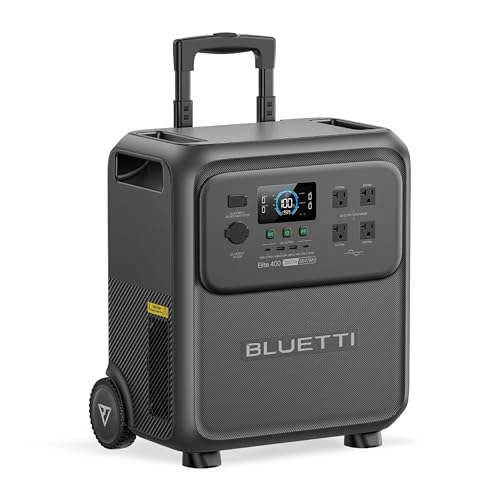
- 3,840Wh LiFePO4 capacity with 2,600W output
- 80% charge in about 70 minutes with AC and solar
- Wheeled design and 15ms UPS backup
Best For: Home backup, RVs, outages, and high-demand devices
Best Lightweight UPS Pick

- 9.5-pound body with 288Wh capacity
- 600W output and 1,500W Power Lifting Mode
- 45-minute 0–80% charging and 10ms UPS
Best For: Camping, road trips, CPAP, and essential electronics
Best Budget Camping Pick

- 6.4-pound design with 256Wh LiFePO4 battery
- 300W pure sine-wave output with 600W peak
- AC, car, solar, and dual charging support
Best For: Camping, road trips, personal electronics, and small devices
Best Compact Power Station – Jackery Explorer 1000 v2
The Jackery Explorer 1000 v2 is a practical choice for shoppers comparing portable power stations for camping, road trips, or emergency use. It combines a 1,070Wh capacity with a 1,500W output in a relatively lightweight 23.8-pound design.
Best For: Campers and emergency-preparedness buyers who want strong output without carrying a bulky unit.
Pros:
- 1,500W output with a 3,000W surge peak for appliances such as fridges and electric pots.
- LFP battery rated for more than 4,000 cycles and a lifespan exceeding 10 years.
- App-controlled charging modes, including emergency fast charging and quiet overnight charging.
- Multiple connection options, including three AC outlets, USB-C, USB-A, and a car port.
Cons:
- One-hour charging requires enabling emergency charging in the Jackery app.
- Solar charging is compatible only with Jackery solar panels.
With its foldable handle, useful port selection, and compact build, the Explorer 1000 v2 balances portability and capability well. It is especially appealing when weight and long-term battery life matter as much as output.
Best Fast-Charging Backup – BLUETTI AC180
The BLUETTI AC180 is a strong all-around option among portable power stations, with a 1,152Wh LiFePO4 battery, 1,800W output, and fast recharge capability. Its broad outlet selection also makes it suitable for outdoor use and household backup.
Best For: Buyers who need fast charging, high output, and UPS protection for outages.
Pros:
- Can fully charge in about one hour using 1,440W AC input.
- 1,800W output can be boosted to 2,700W through the BLUETTI app.
- 500W solar input supports solar charging in approximately 2.8 to 3.3 hours.
- UPS functionality provides emergency power to essentials with 20ms switching.
Cons:
- At 37.4 pounds, it is considerably heavier than smaller portable models.
- The higher output and larger housing may be more than casual users need.
The AC180 stands out for combining fast AC and solar charging with dependable backup features. Its weight is the main portability trade-off, but the performance and included charging cables make it a well-equipped option.
Best High-Capacity Option – Jackery Explorer 2000 v2
The Jackery Explorer 2000 v2 is built for shoppers who need substantial stored energy from portable power stations. Its 2,042Wh capacity and 2,200W AC output support home backup, camping, and other demanding applications while its 39.5-pound weight remains relatively manageable for a 2kWh unit.
Best For: Home backup users and outdoor setups that need longer runtime and higher continuous output.
Pros:
- Large 2,042Wh capacity with 2,200W output and three AC ports.
- 0% to 80% charging takes about 66 minutes; emergency mode can fully charge in 102 minutes.
- Silent charging operates below 30dB, and smart temperature control helps reduce noise.
- 20ms seamless switching supports uninterrupted power for essential devices.
Cons:
- Its 39.5-pound weight is heavier than the smaller units in this roundup.
- It has only three AC ports, which may limit simultaneous AC connections.
The Explorer 2000 v2 is a compelling choice when capacity and backup performance take priority over minimum weight. Its quiet charging mode and UPS capability also make it suitable for indoor use during outages.
Best Expandable Power Station – EcoFlow DELTA 3
The EcoFlow DELTA 3 is a flexible option among portable power stations, offering 1,024Wh of capacity, 1,800W of output, and expansion up to 5kWh with compatible EcoFlow batteries. It also supports fast AC and solar recharging for emergency and outdoor applications.
Best For: Buyers who want a scalable backup system that can grow beyond the station’s built-in capacity.
Pros:
- Full AC charging takes about 56 minutes, with 80% available in roughly 30 minutes.
- Expandable from 1kWh to as much as 5kWh through compatible EcoFlow battery packs.
- LiFePO4 cells provide 4,000 cycles to 80% capacity and a claimed 10-year lifespan.
- Can power up to 13 appliances simultaneously and includes an IP65 battery pack.
Cons:
- Expansion requires purchasing compatible EcoFlow extra batteries separately.
- At 12.5kg, it is not the lightest choice for frequent carrying.
The DELTA 3 makes the most sense for users who may need more capacity over time. Its fast recharge performance, durable battery chemistry, and expansion ecosystem provide flexibility for both short outings and longer backup needs.
Best Lightweight Pick – Jackery Explorer 300
The Jackery Explorer 300 is a compact choice for shoppers who want portable power stations that are easy to carry. Its 292Wh capacity, 300W output, and mix of AC, USB, and car charging ports suit camping, travel, and smaller electronics.
Best For: Lightweight camping, hiking, travel, cameras, drones, laptops, and CPAP use.
Pros:
- Weighs about 7.5 pounds and has an integrated carry handle.
- Offers two AC outlets, USB-C, two USB-A ports, and a 120W car port.
- LiFePO4 battery is rated for more than 4,000 cycles before reaching 70% capacity.
- Can reach 80% charge in about 2.8 hours with a compatible 100W solar panel.
Cons:
- Its 292Wh capacity and 300W rated output are intended for smaller loads rather than large appliances.
- Solar panels are optional.
- Orders require a physical delivery address rather than only a PO Box.
The Explorer 300 emphasizes portability and everyday device charging over long runtimes for power-hungry equipment. It is a practical entry point for outdoor users who want a lightweight solar-ready backup.
Best for Everyday Use – BLUETTI Elite 100 V2
The BLUETTI Elite 100 V2 is a versatile option among portable power stations, combining a 1,024Wh battery with 1,800W of rated AC output. It is sized for camping, emergency power, and home backup when fast recharging and UPS capability matter.
Best For: Home backup, emergency preparedness, camping, road trips, and powering everyday appliances.
Pros:
- Provides 1,800W of rated output with up to 2,700W Power Lifting capability.
- Reaches 80% charge in approximately 45 minutes using 1,200W TurboBoost AC charging.
- 10ms UPS switchover helps keep compatible routers and PCs running during outages.
- Runs at about 30dB in silent mode and includes app control over Wi-Fi and Bluetooth.
Cons:
- At 25 pounds, it is considerably less portable than compact power stations.
- Vehicle charging at the stated faster rate requires the separate BLUETTI Charger 1.
- The 1,024Wh capacity may provide less runtime than larger 2kWh-class units.
With its rapid AC charging, quiet operation, and UPS feature, the Elite 100 V2 bridges outdoor use and household backup. Its LiFePO4 battery is rated for more than 4,000 cycles to 80%, supporting regular use over the long term.
Best Long-Runtime Option – Anker SOLIX S2000
The Anker SOLIX S2000 is a high-capacity choice for portable power stations, with a 2,010Wh LiFePO4 battery and 1,500W continuous output. Its low idle draw and multiple charging methods make it suitable for extended home backup, outages, and longer off-grid trips.
Best For: Extended refrigerator backup, home power outages, camping, and high-capacity emergency use.
Pros:
- Large 2,010Wh capacity can run a refrigerator for up to 35 hours under stated conditions.
- 1,500W continuous and 3,000W peak output support many essential appliances.
- 314Ah LFP cells are rated for up to 10,000 charge cycles and a 15-year lifespan.
- Supports up to 400W solar input and AC, generator, alternator, and car charging options.
Cons:
- At 35.7 pounds, it is heavier than smaller portable power stations.
- It does not include a 12V DC port.
- Actual appliance runtime varies with the device, usage, and ambient temperature.
The S2000 prioritizes capacity and endurance, making it a stronger fit for prolonged outages than lightweight travel power stations. Its dual-sided outlet layout and sub-10ms switchover also support a cleaner setup for home use.
Best with Extra Features – BLUETTI Elite 400
For shoppers comparing portable power stations for serious home backup, the BLUETTI Elite 400 stands out with a 3,840Wh LiFePO4 battery and 2,600W continuous output. Its wheels, rapid charging, and UPS function make it more practical for outages and demanding equipment than a small camping-focused unit.
Best For: Home emergencies, RV use, off-grid power, and running larger appliances or power tools.
Pros:
- Large 3,840Wh capacity and 2,600W output, with 3,900W surge capability.
- Reaches 80% charge in about 70 minutes with combined AC and solar input.
- 15ms UPS switchover helps keep routers, security cameras, and pet feeders running.
- Easy-roll trolley design improves mobility despite its 86-pound weight.
Cons:
- At 86 pounds, it is substantially heavier than travel-oriented power stations.
- Its large capacity and output may be more than casual campers need.
The Elite 400 is a strong choice when runtime and appliance compatibility matter more than compact portability. It is particularly well suited to planned emergency preparedness and semipermanent backup use.
Best Lightweight UPS Pick – BLUETTI Elite 30 V2
The BLUETTI Elite 30 V2 is a compact option for shoppers who want portable power stations that are easy to carry but still handle more than basic USB charging. Its 288Wh battery, 600W continuous output, and fast wall charging suit short trips, outages, and essential electronics.
Best For: Camping, road trips, CPAP machines, laptops, routers, and lightweight emergency backup.
Pros:
- Lightweight 9.5-pound design is easy to transport.
- Provides 600W continuous output and up to 1,500W in Power Lifting Mode.
- Charges from 0% to 80% in about 45 minutes and fully in about 70 minutes.
- 10ms UPS switching supports sensitive devices during brief outages.
Cons:
- The 288Wh capacity offers less runtime than larger home-backup models.
- Power Lifting Mode is intended for compatible loads and does not change the battery capacity.
Choose the Elite 30 V2 when portability and fast recharging are priorities. It offers a useful middle ground for personal electronics and selected small appliances without the bulk of a full-size backup station.
Best Budget Camping Pick – ALLWEI 300W
The ALLWEI 300W is one of the more compact portable power stations for basic outdoor and emergency needs. With a 256Wh LiFePO4 battery, 300W pure sine-wave output, and a 6.4-pound body, it is designed for charging personal electronics and running selected small devices.
Best For: Camping, road trips, laptops, mini fridges, CPAP machines, and lightweight emergency use.
Pros:
- Compact 6.4-pound design fits easily in a vehicle or backpack.
- LiFePO4 battery is rated for 3,000 charge-discharge cycles.
- Supports AC, car, solar, and AC-plus-solar recharging.
- Includes six output ports and a three-level LED light with SOS mode.
Cons:
- Its 300W continuous output limits use with larger appliances.
- The solar panel is sold separately.
- 256Wh capacity is best suited to shorter-duration power needs.
The ALLWEI 300W makes sense for buyers who value low weight, flexible charging, and straightforward device support. It is a practical companion for camping and car-based trips, but larger loads require a higher-output model.
How We Picked the Best Portable Power Stations
We evaluated these Portable Power Stations by looking at the specifications that matter most in everyday use: usable battery capacity, continuous and peak AC output, recharge options, battery lifespan, weight, portability, and safety features. We also considered whether each model is better suited to short trips, emergency backup, high-demand appliances, or extended off-grid use.
Capacity is listed in watt-hours (Wh), while output is measured in watts (W). A higher Wh rating generally means longer runtime, but actual performance varies with inverter efficiency, connected-device load, temperature, and charging behavior.
Quick Comparison
| Best For | Recommended Capacity | What to Prioritize |
|---|---|---|
| Phones, lights, and small electronics | 200–500Wh | Low weight, USB ports, and easy charging |
| Camping and weekend travel | 500–1,200Wh | Solar input, portability, and fast recharge |
| Home emergency backup | 1,000–2,000Wh | High AC output, pass-through charging, and expansion options |
| Large appliances or extended outages | 2,000Wh or more | Large capacity, durable battery chemistry, and strong inverter output |
Key Buying Factors for Portable Power Stations
Battery Capacity and Runtime
Estimate your energy needs before buying. Divide a device’s wattage into the station’s watt-hours for a rough runtime, then allow for conversion losses. A 1,000Wh model can run a 100W device for considerably less than 10 hours in real-world conditions.
AC Output and Surge Power
Check both continuous output and peak or surge output. Small electronics need little power, while refrigerators, power tools, heaters, and cooking appliances may require substantial startup power. Make sure the station’s ratings exceed your equipment’s requirements.
Battery Chemistry and Recharge Speed
LiFePO4 batteries are popular because they typically offer long cycle life and strong thermal stability. Fast wall charging is useful for emergency preparation, while solar input matters more for extended off-grid use. Check the maximum solar wattage and whether panels are included.
Size, Weight, and Connectivity
Large-capacity units provide more energy but are harder to carry. Look for handles, wheels, clear displays, USB-C outputs, and app monitoring if those features fit your routine. Also verify the number and type of outlets you actually need.
Who Should Buy Which Portable Power Stations?
Choose a compact model such as the Jackery Explorer 300 or BLUETTI Elite 30 V2 for phones, lights, cameras, routers, and short outings. The ALLWEI 300W model is another practical choice for basic low-power needs.
For general camping and balanced home backup, consider midrange options such as the Jackery Explorer 1000 v2, BLUETTI AC180, EF ECOFLOW DELTA 3, or BLUETTI Elite 100 V2. These offer a useful blend of capacity, output, and manageable portability.
For demanding appliances or longer outages, the Jackery Explorer 2000 v2, Anker SOLIX S2000, or BLUETTI Elite 400 are better suited to higher energy needs. Prioritize capacity and output first, then confirm the unit’s weight, charging requirements, and storage space before purchasing.