Choosing a first dovetail saw can make hand-cut joinery feel precise and manageable—or unnecessarily frustrating. The right saw should track cleanly, start easily, and feel comfortable enough to control through thin stock and layout lines.
This roundup compares 10 beginner-friendly dovetail saws, including Japanese pull saws, traditional backed saws, compact detail saws, and versatile options for dovetails, dowels, and flush cuts. Use the guide below to match tooth style, blade size, handle design, and cutting behavior to your projects.
Best 10 Beginner-Friendly Dovetail Saws Picks for 2026
Best Precision Pick
SUIZAN 6-Inch Dozuki Dovetail Saw

- Rigid steel back helps maintain straight cuts
- 25 TPI teeth and 0.02-inch kerf suit fine joinery
- Replaceable blade and secure rattan-wrapped handle
Best For: Small dovetails, tenons, boxes, and other precise crosscuts
Best Simple Joinery Saw
Shark Dowel/Dovetail/Detail Saw
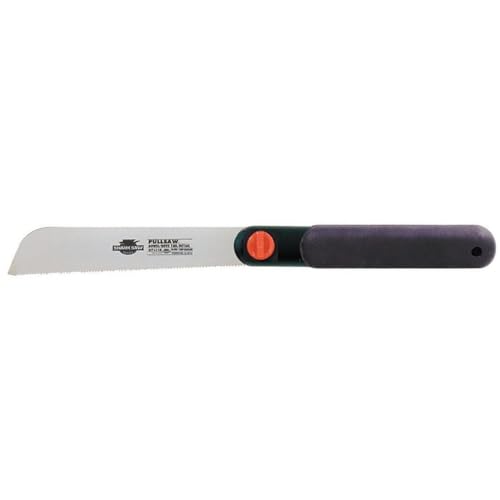
- Fine 24 TPI teeth support clean cuts
- Narrow kerf minimizes stock removal
- Useful for dovetails, dowels, and flush trimming
Best For: Basic joinery and flush-cutting tasks
Best Versatile Pull Saw
RUITOOL 6-Inch Double-Edge Ryoba

- 14 and 17 TPI edges handle different materials
- Supports rip, cross, flush, and finish cuts
- Hardened SK5 blade with three-sided teeth
Best For: Beginners wanting one saw for varied woodworking cuts
Best Push-Cut Option

- Thicker blade supports forceful push strokes
- 8-inch blade offers longer cutting reach
- 1-3/4-inch cut depth and portable 4.2-ounce build
Best For: Longer detail cuts and users who prefer push-stroke control
Practical Flush-Cut Pick

- Reversible spring-loaded blade
- Ergonomic ProTouch handle
- Lightweight 10-inch blade
Best For: Beginners needing a versatile flush-cutting saw
Precision Japanese Pick
SUIZAN 7-Inch Dozuki Dovetail Saw

- Thin 0.3 mm Japanese-steel blade
- 17 TPI universal tooth pattern
- Tool-free replaceable blade
Best For: Beginners practicing precise dovetails and tenons
Comfortable Fine-Cut Pick
WORKPRO 6-Inch Japanese Pull Saw

- Sharp 23 TPI triple-tooth blade
- Thin SK5 blade reduces resistance
- Non-slip beechwood handle
Best For: Beginners doing detailed DIY joinery and small projects
Best Compact Joinery Pick
JORGENSEN Folding Japanese Pull Saw
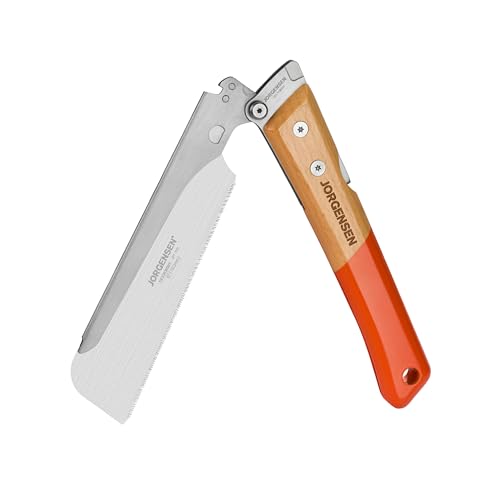
- 0.3 mm blade makes narrow kerfs
- 21 TPI teeth suit clean precision cuts
- Folds for convenient portability
Best For: Dovetails, tenons, restoration, and detailed woodworking
Best Traditional Back Saw
HAUTMEC 12-Inch Fine-Cut Dovetail Saw

- 11 TPI balances speed and precision
- 65Mn steel blade resists wear
- Reinforced spine supports accurate cuts
Best For: Tenons, grooves, trim, and general woodworking
Best Precision Pick – SUIZAN 6-Inch Dozuki Dovetail Saw
For beginners seeking beginner-friendly dovetail saws, the SUIZAN Dozuki offers a rigid, narrow blade and fine crosscut teeth that make it easier to follow layout lines on small joinery projects.
Best For: Dovetails, tenons, box making, picture frames, trim, and model work where crisp, controlled crosscuts matter.
Pros:
- Steel back keeps the 0.012-inch blade straight and square.
- Fine 25 TPI teeth and a narrow 0.02-inch kerf support precise cuts.
- Rattan-wrapped wood handle provides a secure grip.
- Replaceable blade design can extend the saw’s useful life.
Cons:
- Designed for crosscuts rather than general-purpose rip cutting.
- Replacement blade is sold separately.
- The very fine blade is best suited to small, careful work.
Its rigid steel spine and light 5.47-ounce build make this a particularly approachable choice when accuracy and clean baselines are more important than cutting speed.
Best Simple Joinery Saw – Shark Dowel/Dovetail/Detail Saw
The Shark 10-2204 is one of the more beginner-friendly dovetail saws for straightforward detail work, combining a lightweight design with fine 24 TPI teeth and a narrow kerf.
Best For: Dovetail and other joinery cuts, plus trimming dowels and plugs flush with a workpiece.
Pros:
- 24 TPI teeth produce exceptionally fine cuts.
- Very narrow kerf removes minimal stock.
- Can cut dowels and plugs flush.
- Lightweight manual design is easy to handle.
Cons:
- The supplied notes do not specify a replaceable blade.
- Its 6.5-inch blade is less suited to larger, deeper cuts.
This is a practical option if you want one compact saw for fine joinery and flush trimming without additional features complicating the learning process.
Best Versatile Pull Saw – RUITOOL 6-Inch Double-Edge Ryoba
For beginners who want flexibility, the RUITOOL Ryoba is among the more beginner-friendly dovetail saws because its double-edged blade offers separate tooth patterns for hardwood and softwood work.
Best For: Flush cuts, finish cuts, and switching between hardwood and softwood using one compact Japanese pull saw.
Pros:
- 17 TPI and 14 TPI edges provide different cutting options.
- Can be used for both rip and cross cuts according to the supplied notes.
- SK5 high-carbon steel blade is hardened to HRC 60–63.
- Three-sided tooth grinding supports chip removal and smooth cutting.
Cons:
- It is not a dedicated steel-backed dovetail saw.
- The flexible blade may require more attention to control than a rigid-backed design.
- Different tooth edges can add a small learning curve for first-time users.
Its two tooth patterns make it a useful general woodworking saw, especially when your projects include more than dovetail baselines and require both flush and finish cuts.
Best Push-Cut Option – Zona Thick Dovetail Saw
The Zona 35-380 gives beginners a more forceful push-stroke alternative among beginner-friendly dovetail saws, with an 8-inch blade, 18 TPI teeth, and a thicker 0.020-inch kerf.
Best For: Longer dovetail or detail cuts where a push stroke and the saw’s 1-3/4-inch cut depth are useful.
Pros:
- Thick kerf supports more forceful push-stroke cutting.
- 8-inch blade is the longest razor saw blade in the supplied description.
- Provides a 1-3/4-inch cut depth.
- Light 4.2-ounce construction is portable.
Cons:
- Its 18 TPI tooth pattern is coarser than the finer options listed here.
- The 0.020-inch kerf removes more material than the SUIZAN’s narrow kerf.
- No warranty is listed in the supplied details.
This saw is a sensible fit if you prefer the familiar feel of a push stroke and need more blade length, though it offers less of the ultra-fine kerf control favored for delicate joinery.
Practical Flush-Cut Pick – IRWIN 10-Inch Dovetail Saw
For beginners comparing beginner-friendly dovetail saws, the IRWIN 10-Inch model offers a straightforward manual design with a lightweight ProTouch handle and a reversible blade. Its 14-point tooth count and wide-body flush-cut blade make it a versatile option for basic woodworking and flush-cutting tasks.
Best For: Beginners who want a lightweight, reversible saw for general flush-cutting and simple joinery tasks.
Pros:
- Spring-loaded blade can be used for left- or right-cutting.
- ProTouch handle is designed for ergonomic comfort.
- 10-inch high-speed-steel blade and 14-point tooth count offer a familiar, easy-to-handle setup.
- Includes a lifetime limited warranty.
Cons:
- The plastic/rubber handle may feel less traditional than a wood-handled saw.
- The supplied notes describe a 90-degree cutting angle and engineered-wood surface recommendation, so it may be less specialized for fine hardwood joinery.
The reversible blade and lightweight construction make this an approachable choice for beginners, especially when flush-cutting flexibility matters more than a specialized Japanese-style joinery blade.
Precision Japanese Pick – SUIZAN 7-Inch Dozuki Dovetail Saw
The SUIZAN Dozuki is a strong option for beginners seeking beginner-friendly dovetail saws with precise, low-effort cutting. Its thin Japanese-steel blade, reinforced back, and 17 TPI universal teeth support rip cuts, crosscuts, and angle cuts for dovetails, tenons, and other fine joinery.
Best For: New woodworkers learning accurate dovetail, tenon, cabinetry, and small-box cuts.
Pros:
- 0.3 mm blade and 0.5 mm kerf help produce narrow, clean cuts.
- Steel back helps keep the blade straight and square.
- 17 TPI teeth handle rip, cross, and angle cuts.
- Replaceable blade can be changed by hand without tools.
Cons:
- Replacement blades are sold separately.
- The 30-day warranty is shorter than some competing warranty offerings.
- The fine blade may require more care than a thicker general-purpose saw.
With its non-slip elastomer grip, compact size, and versatile tooth pattern, the SUIZAN offers beginners a controlled way to practice fine joinery while retaining useful cutting flexibility.
Comfortable Fine-Cut Pick – WORKPRO 6-Inch Japanese Pull Saw
For beginners choosing beginner-friendly dovetail saws, the WORKPRO 6-Inch Japanese pull saw combines a compact blade with a comfortable beechwood handle. Its 23 TPI triple-tooth geometry and thin SK5 blade are aimed at clean, controlled cuts for dovetails, tenons, and other detailed woodworking projects.
Best For: Beginners who prioritize a comfortable grip and fine, low-resistance cuts for DIY woodworking.
Pros:
- 23 TPI triple-tooth geometry is designed for sharp, clean cuts.
- 0.017-inch blade helps minimize cutting resistance.
- Reinforced spine supports straight, controlled cuts.
- Non-slip beechwood handle is ergonomic and comfortable.
Cons:
- The 6-inch blade provides less reach than the longer saws in this roundup.
- The supplied notes do not mention a replaceable blade.
- Its fine 23 TPI configuration is more specialized for detailed cuts than broad, general-purpose sawing.
The WORKPRO is a beginner-friendly choice for small, precise projects, particularly when a lightweight tool, comfortable handle, and thin blade are more important than maximum cutting capacity.
Best Flush-Cut Pick – HAUTMEC Reversible Dovetail Saw
For beginners seeking beginner-friendly dovetail saws with extra versatility, the HAUTMEC HT0234 combines a reversible blade with a cranked handle. Its rigid spine and 12 TPI double-ground teeth make it especially practical for trim and flush-cutting tasks.
Best For: Door jambs, moldings, flooring installation, and flush cuts around tight corners or obstructions.
Pros:
- Reversible blade supports left- or right-handed cutting.
- Offset handle provides clearance for flush cuts.
- Rigid carbon steel back helps keep cuts straight.
- Soft-grip handle improves comfort during prolonged use.
Cons:
- Its 12 TPI blade is oriented toward fast flush cutting rather than the finest joinery work.
- The 10-inch blade and cranked handle may be more specialized than a beginner needs for basic dovetails.
The HT0234 is a practical choice when versatility and flush-cut access matter more than a compact, traditional joinery saw. The reversible blade and ergonomic handle make it approachable for varied home-improvement projects.
Best Compact Joinery Pick – JORGENSEN Folding Japanese Pull Saw
The JORGENSEN folding saw is one of the more beginner-friendly dovetail saws for precise small-scale woodworking. Its thin 0.3 mm blade, 21 TPI teeth, and compact beechwood handle are suited to clean cuts in wood and detailed joinery.
Best For: Dovetails, tenons, furniture restoration, musical-instrument projects, and other precision cuts in hardwood or softwood.
Pros:
- Thin blade produces narrow kerfs for precise work.
- Fine 21 TPI hardened teeth support clean cuts.
- Folding design improves portability and storage.
- Tool-less blade replacement adds convenience.
Cons:
- The short handle may feel less comfortable for users who prefer a full-size grip.
- Fine teeth prioritize precision over the fastest material removal.
- Blade-changing instructions involve tapping the blade or spine into place.
With its fine tooth pattern and narrow blade, this JORGENSEN is a strong fit for beginners learning controlled joinery cuts. The folding system is useful for portability, while the compact handle supports single-hand operation.
Best Traditional Back Saw – HAUTMEC 12-Inch Fine-Cut Dovetail Saw
Beginners who want beginner-friendly dovetail saws with a traditional back-saw profile may appreciate this 12-inch HAUTMEC model. Its reinforced spine, 11 TPI teeth, and double-ground design balance cutting speed with controlled precision.
Best For: Tenons, grooves, trim, furniture panels, moldings, and general precision woodworking in wood-based materials.
Pros:
- 65Mn steel blade is designed for toughness and wear resistance.
- Induction-hardened teeth are intended to retain sharpness.
- Double-ground teeth cut on push and pull strokes.
- Reinforced spine and ergonomic handle support controlled cuts.
Cons:
- The 12-inch blade is less compact than the JORGENSEN option.
- Its 11 TPI profile may be less fine than a dedicated high-TPI dovetail saw.
- It is supplied as a bare tool without additional components.
This HAUTMEC offers a reassuringly rigid format for users building confidence with straight and angled cuts. It is a versatile choice for broader woodworking tasks, especially when durability and efficient cutting matter.
How We Picked These Beginner-Friendly Dovetail Saws
We focused on features that matter most when learning hand-cut joinery: controllability, tooth configuration, blade stiffness, kerf, handle comfort, and suitability for small, accurate cuts. The selection includes pull saws and push saws, rip and crosscut patterns, folding and reversible designs, and thicker backed saws that can feel more stable for beginners.
We also considered versatility. A dedicated dovetail saw is useful for repeated joinery, while a Japanese ryoba, flush-cut saw, or detail saw may offer better value if you also build furniture, repair trim, cut dowels, or work in tight spaces.
Quick Comparison
| Type | Best for | What to expect |
|---|---|---|
| Japanese pull saw | Low-effort, controlled cuts | Thin blades and efficient pull strokes |
| Backed dovetail saw | Stable joinery cuts | More rigid blade and predictable tracking |
| Ryoba or reversible saw | Multiple cutting tasks | More versatility, with a learning curve between tooth patterns |
| Folding saw | Storage and portability | Convenient design with a joint that should lock securely |
| Detail or flush-cut saw | Small repairs and trimming | Flexible use, but not always ideal for deep dovetails |
Key Buying Factors for Beginner-Friendly Dovetail Saws
Tooth Pattern and Pitch
Fine teeth generally produce cleaner shoulders and are easier to control on small dovetails, while coarser teeth remove stock faster. Rip teeth suit cutting along the grain; crosscut teeth are useful across the grain. Combination or double-edge saws offer flexibility but may require more attention to orientation.
Blade Stiffness and Kerf
A stiff, backed blade helps maintain a straight path and can build confidence during layout-line cuts. A thinner blade removes less material and enters narrow kerfs easily, but it may flex if twisted or forced. Match the kerf to your marking knife or chisel work rather than treating the thinnest blade as automatically best.
Handle and Cutting Direction
Pull saws can feel natural because the blade stays in tension during the stroke, allowing a light grip and precise starting. Traditional push saws may feel more familiar to some users. Look for a handle that supports a relaxed wrist and gives enough control without encouraging excessive pressure.
Size and Intended Stock
Six-inch blades are convenient for small boxes, drawers, and thin boards. Longer blades can provide smoother strokes and greater depth, but they need more clearance. Check the published cut depth before buying for thicker work.
Who Should Buy Which Beginner-Friendly Dovetail Saws?
Choose a fine-tooth Japanese pull saw if you prioritize easy starts, clean cuts, and compact projects. Pick a rigid backed dovetail saw if straight tracking and repeatable joinery matter more than portability. A ryoba or reversible model is a practical choice for beginners who want one tool for several tasks, while a folding saw suits mobile work or limited storage.
For occasional repairs, dowels, and flush trimming, a detail-oriented multipurpose saw may be more useful than a dedicated dovetail tool. Whichever style you choose, pair it with accurate layout lines, a stable workpiece, and light, consistent strokes—the technique will influence results as much as the saw.