A dependable portable power station can keep phones, lights, routers, medical devices, and small appliances running when the grid goes down. The best choice depends on more than battery capacity: output, recharge speed, battery chemistry, portability, and the devices you need to support all matter.
We compared 10 leading models across several capacity and power classes so you can find a practical backup for short interruptions, extended outages, camping, or emergency preparedness.
Best 10 Portable Power Stations for Power Outages Picks for 2026
Best High-Capacity Backup

- 2,042Wh capacity with 2,200W AC output
- 20ms UPS switching for outage protection
- Quiet charging and up to 10-year battery life
Best For: Home backup users needing substantial capacity and strong output
Best Long-Running Refrigerator Backup
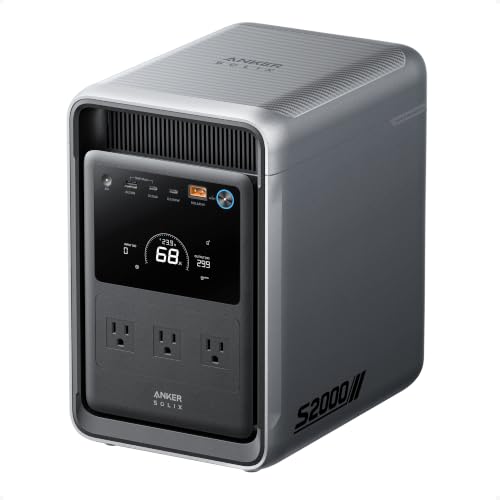
- 2,010Wh battery with efficient low-idle operation
- 1,500W output and 3,000W peak capacity
- Sub-10ms switchover and multiple recharge methods
Best For: Extended refrigerator and essential-appliance backup
Best Lightweight Emergency Pick

- 23.8-pound design with 1,070Wh capacity
- 1,500W output and 3,000W surge support
- App-controlled one-hour emergency charging
Best For: Portable emergency backup, camping, and road trips
Best Fast-Charging Midrange Backup

- 1,800W output with 1,152Wh LiFePO4 capacity
- 80% charge in 45 minutes
- 500W solar input and 20ms UPS function
Best For: Fast-recharging home, camping, and outage backup
Fast-Charging Emergency Backup

- 1,056Wh LiFePO4 battery with 10-year lifespan
- 1,800W output and 2,400W peak capacity
- 80% charge in about 43 minutes with AC input
Best For: Home outages, RVs, and camping
Smart UPS Protection
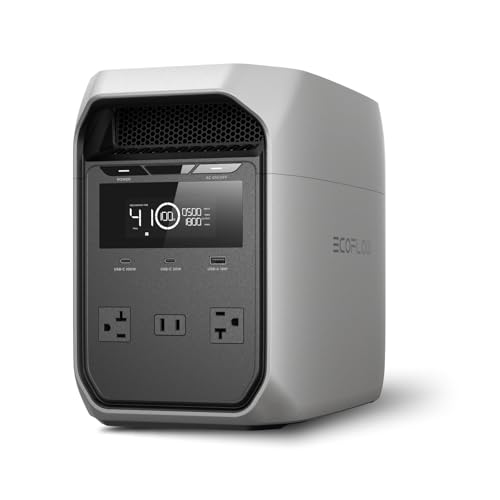
- 1,024Wh capacity with 1,800W AC output
- Under-10ms UPS switching for sensitive electronics
- 80% charge in about 45 minutes
Best For: Home offices, electronics, and appliance backup
Lightweight Personal Backup

- 292Wh LiFePO4 battery in a compact, lightweight design
- 300W output with 600W peak surge capacity
- Charges up to six devices through AC, USB, and car ports
Best For: Small electronics, travel, and camping
Quiet UPS Backup

- 245Wh capacity with 300W output
- Under-20ms UPS switching
- 1-hour AC recharge and 7.8-lb design
Best For: Quiet backup for essential devices and small appliances
High-Output Emergency Backup

- 600W output with 1,500W lifting mode
- 10ms UPS switching
- 80% charge in about 45 minutes
Best For: CPAP, electronics, and short-term blackout backup
Lightweight Essential Backup
ALLWEI 300W Portable Power Station

- 256Wh capacity with 300W output
- 6.4-pound portable design
- Multiple ports and four recharge methods
Best For: Portable emergency kits, camping, and small electronics
Best High-Capacity Backup – Jackery Explorer 2000 v2
For shoppers comparing portable power stations for power outages, the Jackery Explorer 2000 v2 stands out with a 2,042Wh capacity and 2,200W AC output. Its 39.5-pound design, fast charging, quiet operation, and UPS switching make it a practical choice for keeping several essential devices running at home or while camping.
Best For: Home backup users who need high capacity, strong AC output, and quiet operation.
Pros:
- 2,042Wh capacity and 2,200W output support multiple essentials.
- 20ms UPS switching helps maintain power during outages.
- Charges to 80% in 66 minutes, with solar charging supported.
- LiFePO4 battery is rated for up to 10 years of use.
Cons:
- At 39.5 pounds, it is less convenient to carry than smaller models.
- Solar charging requires compatible 400W panels for the stated charging time.
The Explorer 2000 v2 is a strong all-around backup when capacity and appliance compatibility matter more than minimum size. Its quiet charging mode and seamless switching are especially useful for overnight use and outage preparedness.
Best Long-Running Refrigerator Backup – Anker SOLIX S2000
The Anker SOLIX S2000 is a compact option among portable power stations for power outages, pairing a 2,010Wh LiFePO4 battery with 1,500W continuous output and 3,000W peak output. Its low idle draw, multiple charging options, and sub-10ms switchover are useful for extended emergency backup.
Best For: Home users prioritizing long runtime for essentials such as refrigerators.
Pros:
- Low 6W idle draw and 10% higher efficiency are designed to extend runtime.
- Supports up to 400W solar input plus AC, generator, alternator, and car charging.
- LiFePO4 battery is rated for up to 10,000 charge cycles.
- Sub-10ms switchover helps protect connected devices during interruptions.
Cons:
- There is no 12V DC port.
- Its 1,500W continuous output is lower than some similarly sized power stations.
With a 35.7-pound body and 2,010Wh capacity, the S2000 balances portability and endurance. It is particularly appealing when keeping a refrigerator or other always-on appliance operating is a higher priority than maximum AC wattage.
Best Lightweight Emergency Pick – Jackery Explorer 1000 v2
For buyers who want portable power stations for power outages without carrying a large unit, the Jackery Explorer 1000 v2 offers 1,070Wh of capacity and 1,500W AC output in a 23.8-pound package. It also includes a foldable handle, multiple ports, app control, and a selectable one-hour emergency charging mode.
Best For: Users who want a lighter backup unit for essential appliances, camping, and road trips.
Pros:
- 23.8-pound design is easier to transport than larger 2kWh models.
- 1,500W output and 3,000W surge support appliances such as refrigerators and electric pots.
- Three AC outlets, USB-C, USB-A, and a car port support varied devices.
- LFP battery is rated to retain over 70% capacity after 4,000 cycles.
Cons:
- Its 1,070Wh capacity provides less runtime than 2kWh-class alternatives.
- Solar charging is compatible only with Jackery solar panels.
- One-hour charging must be enabled through the Jackery App.
The Explorer 1000 v2 is a sensible middle ground for emergency readiness: substantially more capable than small power banks while remaining manageable to move. Choose it when portability and fast recharge matter more than maximum outage duration.
Best Fast-Charging Midrange Backup – BLUETTI AC180
The BLUETTI AC180 is a versatile choice among portable power stations for power outages, combining a 1,152Wh LiFePO4 battery with 1,800W output and eight outlets. It can reach 80% in 45 minutes, fully charge in about an hour from AC input, and accept up to 500W of solar input.
Best For: Buyers seeking fast recharge, high AC output, and a capable midrange home backup.
Pros:
- 1,800W output handles a broad range of household and outdoor devices.
- AC charging can fully replenish the battery in about one hour.
- 500W solar input can charge the unit in approximately 2.8 to 3.3 hours.
- 20ms UPS operation helps maintain power for connected essentials.
Cons:
- Its 1,152Wh capacity offers less total runtime than 2kWh-class models.
- The 2,700W higher-output mode must be activated through the BLUETTI App.
The AC180 is a strong fit when quick turnaround is important: it can recharge rapidly from AC or solar and provides more output than many similarly sized units. Its included charging cables, five-year warranty, and UPS function add practical value for outage preparation.
Fast-Charging Emergency Backup – Anker SOLIX C1000
The Anker SOLIX C1000 is a strong choice among portable power stations for power outages when you need substantial capacity, quick recharging, and enough output for many household appliances. Its 1,056Wh LiFePO4 battery, 1,800W running output, and 2,400W surge capacity provide versatile backup power, while the app adds charging and monitoring controls.
Best For: Home backup, outages, RV use, and camping when fast charging and high output matter.
Pros:
- Reaches 80% charge in about 43 minutes and a full charge in under an hour with AC UltraFast charging.
- LiFePO4 battery is rated for 3,000 cycles over a 10-year lifespan.
- Provides 1,800W of running power and 2,400W peak output across 11 ports.
- Supports up to 600W solar input and includes a car charging cable.
Cons:
- At 27.6 pounds, it is less convenient to carry than compact power stations.
- UltraFast AC charging and app controls require a smartphone.
- Solar panels are not listed among the included components.
With its large battery, high appliance compatibility, and five-year warranty, the SOLIX C1000 is a practical all-around backup unit. It is especially compelling if you want to restore charge quickly between outage events.
Smart UPS Protection – EcoFlow DELTA 3 Classic
The EcoFlow DELTA 3 Classic is designed for portable power stations for power outages, combining 1,024Wh of capacity with 1,800W AC output. Its under-10ms UPS switching helps protect sensitive electronics, while fast AC charging and app-based controls make it useful for both emergency backup and everyday power management.
Best For: Homes, offices, and users who need fast backup for electronics and appliances.
Pros:
- Supplies 1,800W output with 3,600W surge capacity for refrigerators, microwaves, laptops, and more.
- Under-10ms UPS switching helps reduce interruptions for computers, servers, and medical devices.
- Reaches 80% charge in approximately 45 minutes with X-Stream AC charging.
- LiFePO4 cells are rated for more than 10 years of daily use.
Cons:
- Its 26.7-pound weight may be cumbersome for frequent carrying.
- The optional solar panel is not included.
- It is not compatible with DELTA 2 Smart Extra Battery or DELTA 3 Series Smart Extra Battery.
The DELTA 3 Classic stands out for outage preparation because its UPS function prioritizes continuity for sensitive equipment. Choose it when automatic switchover and app monitoring are more important than the lightest possible design.
Lightweight Personal Backup – Jackery Explorer 300
The Jackery Explorer 300 is a compact option among portable power stations for power outages when your priority is keeping smaller electronics running. Its 292Wh LiFePO4 battery, 300W output, and multiple USB and AC connections suit phones, laptops, cameras, and other essentials without the bulk of a larger backup unit.
Best For: Lightweight travel, camping, communications gear, laptops, and small-device blackout backup.
Pros:
- Weighs about 7.5 pounds and has an integrated handle for easier transport.
- Offers six-device charging through two AC outlets, USB ports, USB-C PD, and a car port.
- LiFePO4 battery supports more than 4,000 cycles before reaching 70% capacity.
- Can reach 80% charge in about 2.8 hours with a 100W Jackery solar panel.
Cons:
- Its 292Wh capacity and 300W rated output are intended for smaller loads, not major appliances.
- Solar panels are optional rather than included.
- Listed battery charging time is about four hours with standard charging.
The Explorer 300 is best viewed as a portable essentials kit rather than whole-home outage backup. Its low weight and durable battery make it convenient for keeping personal electronics and compact equipment powered.
Quiet UPS Backup – EcoFlow RIVER 3
For shoppers comparing portable power stations for power outages, the EcoFlow RIVER 3 stands out as a compact option for essential, lower-wattage devices. Its 245Wh battery, 300W output, and under-20ms UPS switching support short-term backup for communication, food storage, and other essentials.
Best For: Quiet home backup, routers, small appliances, camping, and users who prioritize fast recharging and portability.
Pros:
- Charges from 0–100% in about one hour through AC power.
- LiFePO4 battery rated for 3,000+ cycles and up to 10 years of use.
- Under-20ms UPS switching helps keep connected devices running during an outage.
- At 7.8 pounds, it is easy to store or carry.
Cons:
- Its 245Wh capacity and 300W continuous output are better suited to essentials than large appliances.
- The listed 110W solar input takes longer to recharge than AC charging.
The RIVER 3 is a practical choice when quiet operation, compact storage, and automatic backup matter more than extended high-power runtime. Confirm your devices’ wattage before relying on it for an outage.
High-Output Emergency Backup – BLUETTI Elite 30 V2
The BLUETTI Elite 30 V2 is a strong contender among portable power stations for power outages when you need more output in a compact package. It provides 600W continuously, supports 1,500W in Power Lifting Mode, and includes a 10ms UPS function for devices such as laptops, routers, and CPAP machines.
Best For: Blackout backup, CPAP users, laptops, routers, car fridges, and small high-demand appliances.
Pros:
- 600W continuous output with a 1,500W Power Lifting Mode.
- Recharges to 80% in about 45 minutes and fully in about 70 minutes by wall power.
- 10ms UPS switching supports sensitive electronics during sudden power cuts.
- Offers eight charging modes and weighs about 9.5 pounds.
Cons:
- The 288Wh capacity may limit runtime for appliances drawing substantial power.
- Power Lifting Mode is intended for compatible loads and does not increase the battery capacity.
Choose the Elite 30 V2 if output flexibility and fast emergency recharge are priorities. Its UPS performance and 600W rating make it more versatile than many entry-level units, while its capacity remains best for short-duration backup.
Lightweight Essential Backup – ALLWEI 300W Portable Power Station
The ALLWEI 300W is a lightweight option for shoppers seeking portable power stations for power outages, road trips, or camping. Its 256Wh LiFePO4 battery delivers 300W of continuous power, with a 600W surge rating for essentials such as laptops, mini fridges, CPAP machines, and small electronics.
Best For: Budget-conscious emergency kits, car travel, camping, small electronics, and short-term essential power.
Pros:
- At 6.4 pounds, it is especially easy to carry and store.
- LiFePO4 battery supports up to 3,000 charge-discharge cycles.
- Six output ports can charge multiple devices, including through 60W USB-C PD.
- Supports AC, car, solar, and AC-plus-solar recharging.
Cons:
- Its 300W continuous output is not designed for larger household appliances.
- AC or car charging takes about 3.5–4 hours when used alone.
- The solar panel is sold separately.
The ALLWEI is a sensible grab-and-go backup for modest power needs. Its low weight, multiple ports, LED emergency light, and flexible recharging make it useful in a vehicle or emergency kit, though the modest capacity calls for careful load planning.
How We Picked the Best Portable Power Stations for Power Outages
We focused on usable emergency-backup features rather than headline capacity alone. Each model was evaluated for battery size, continuous and peak AC output, recharge options, portability, battery chemistry, and the types of devices it can realistically support. We also considered whether the design suits occasional outages, frequent use, travel, or longer off-grid periods.
LiFePO4 batteries generally offer a longer service life and strong durability, while lighter models can be easier to move and store. Manufacturer specifications should still be checked before purchase, especially for surge-sensitive equipment and appliances with high startup demands.
Quick Comparison
| Capacity class | Best suited for | Typical devices |
|---|---|---|
| 200–300Wh | Short outages and portability | Phones, lights, laptops, routers |
| 1,000–1,150Wh | General home backup | Multiple electronics, CPAPs, small appliances |
| 2,000Wh or more | Longer outages and higher loads | Refrigerators, larger electronics, several essentials |
Key Buying Factors for Portable Power Stations for Power Outages
Battery Capacity and Runtime
Capacity is measured in watt-hours. Estimate your needs by multiplying each device’s wattage by the hours you expect to use it, then allow for conversion losses. A refrigerator, modem, lights, and medical equipment can drain a small unit quickly, while a larger station provides more reserve.
Continuous and Surge Output
Continuous wattage determines what a station can run normally; surge or peak wattage helps start motors and compressors. Check both figures against your appliances’ running and startup requirements. High-output models are more flexible but usually heavier and more expensive.
Recharge Options and Speed
Look for fast wall charging if outages are intermittent, plus car and solar charging for longer disruptions. Solar input is useful during extended outages, but actual charging time depends on panel wattage, sunlight, temperature, and the station’s input limit.
Battery Life, Safety, and Usability
LiFePO4 chemistry is often preferable for frequent cycling. Also consider pass-through charging, low-battery warnings, a clear display, app controls, regulated outputs, cooling, and built-in lights. Never use a portable power station as a substitute for a properly installed home generator connection.
Who Should Buy Which Portable Power Stations for Power Outages?
Choose a compact 200–300Wh model if you mainly need communication, lighting, laptops, or a router and want something easy to carry. A 1,000–1,150Wh station is the best all-purpose category for households supporting several essentials during ordinary outages. Choose a 2,000Wh-class unit when you need longer runtime, more simultaneous devices, or better support for refrigerators and other demanding loads.
Before buying, list your critical devices, their wattage, desired runtime, storage location, and recharge plan. The right portable power station is the one that covers those requirements with some reserve without becoming too heavy or costly to keep ready.